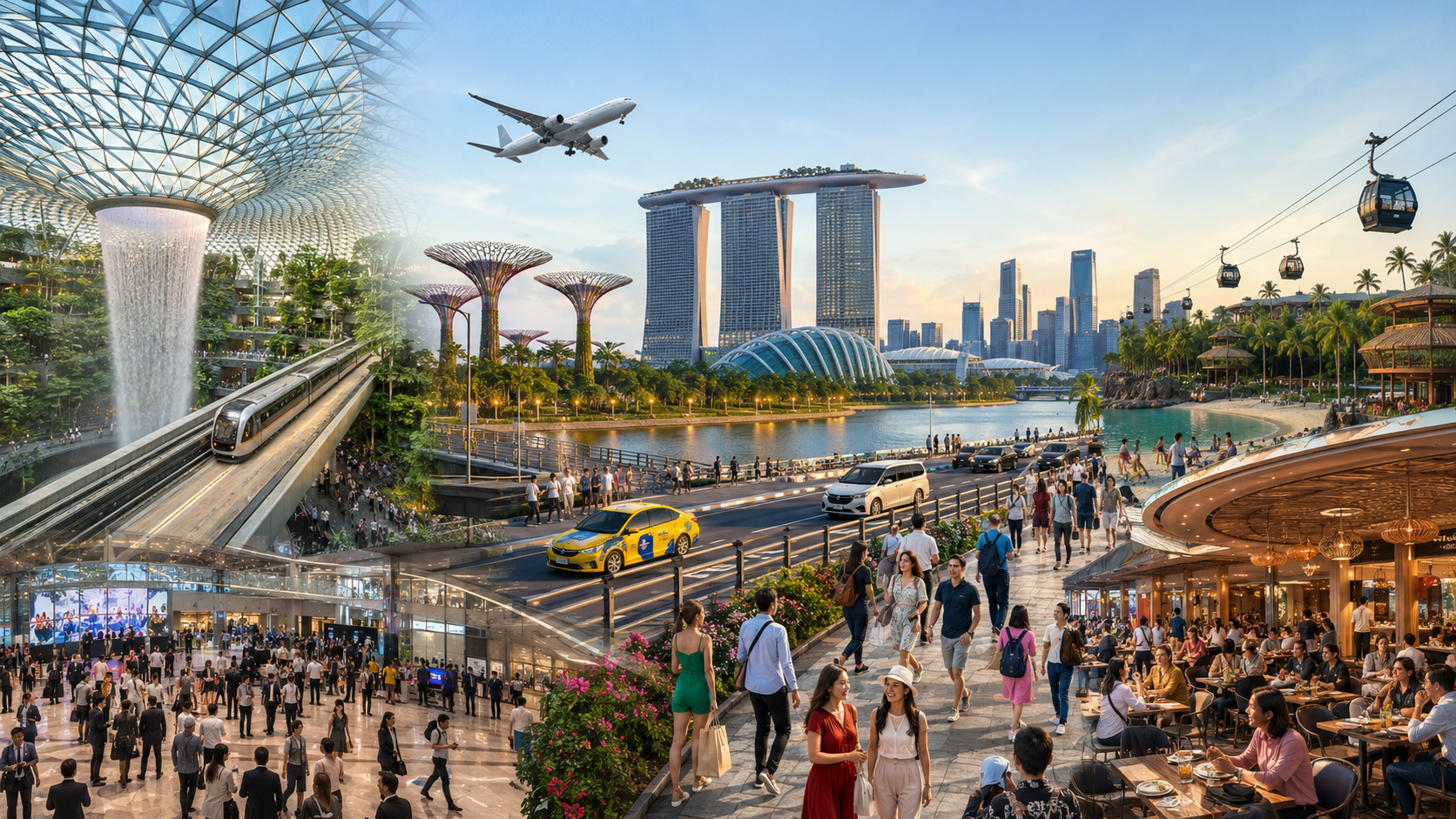
Food and beverage enterprises in Singapore are rewriting their expansion rules in 2026. Rather than relying solely on a compact home market, they are building regional empires through halal production lines, smart kitchen technology, and franchise partnerships. This strategic pivot is turning Singapore into a launchpad for culinary brands targeting Southeast Asia, East Asia, and the Gulf.
Moving Beyond a Saturated Domestic Market
With only about 5.9 million residents, Singapore offers limited room for large-scale F&B growth. Enterprise Singapore’s 2026 industry analysis highlights an annual export and franchise growth rate of 8.4 percent through 2028, driven by markets such as Indonesia, Vietnam, and the United Arab Emirates. Companies like Old Chang Kee, Killiney Kopitiam, and Irvins are opening flagship stores in high-traffic shopping districts overseas. The strategy is clear: use Singapore’s trusted food safety record to attract franchise partners and distribution networks abroad.
Why Halal Certification Is a Strategic Asset
For Singapore F&B companies, halal certification is more than a religious requirement; it is a business accelerator. Indonesia alone has over 270 million people, making it the largest halal food market in the world. In 2026, Singapore halal-certified manufacturers are expanding into Indonesian cities such as Surabaya and Medan, while also targeting the Middle East’s premium retail sector. Halal certification also helps brands enter mainstream supermarkets in Europe and North America, where halal products are increasingly associated with high quality and traceability.
Central Kitchens and Smart Franchise Systems
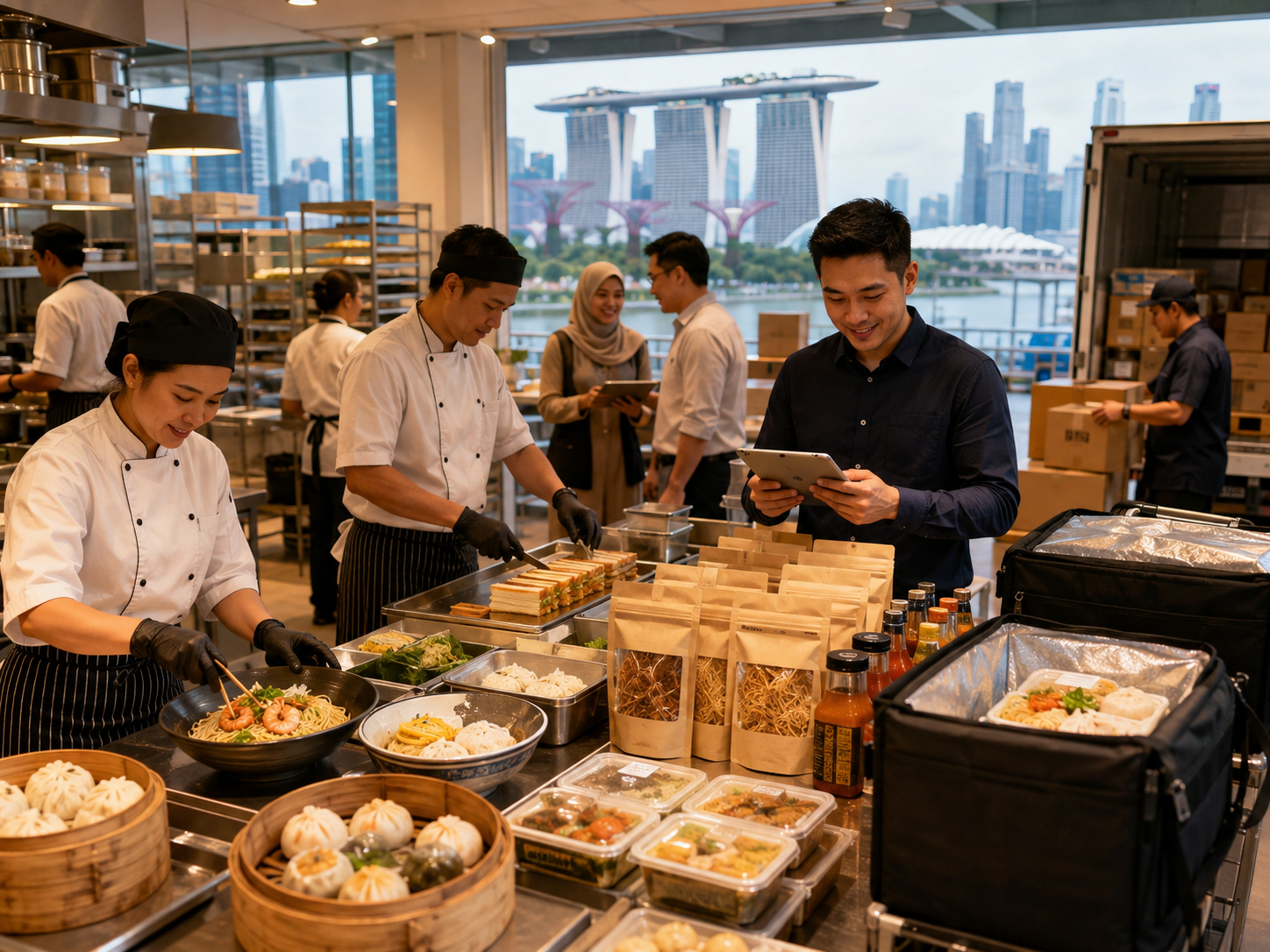
A central kitchen in Singapore can serve multiple overseas outlets, significantly lowering labor costs and quality variance. Brands are producing sauces, marinades, and ready-to-heat meals locally before exporting them to franchise partners. Artificial intelligence tools forecast demand patterns across different regions, allowing supply chain managers to adjust production runs and reduce waste. Integrated point-of-sale systems provide real-time sales data from every outlet, enabling rapid menu adjustments based on local preferences.
Supply Diversification and Eco-Friendly Menus
Recent global supply chain disruptions taught Singapore F&B operators to avoid relying on a single sourcing country. In 2026, many companies are dual-sourcing ingredients from Malaysia, Thailand, and Australia. The Singapore Food Agency’s “30 by 30” goal—to produce 30 percent of the nation’s nutritional needs locally by 2030—has also pushed F&B firms to partner with urban farms and alternative protein producers. Plant-based rendang, soy-based chicken rice, and compostable packaging are now appearing in Singapore-origin restaurant chains across the region.
Singapore’s food and beverage sector is proving that a small city-state can project outsized culinary influence. By blending halal readiness, digital infrastructure, and sustainable sourcing, these companies are building durable regional brands.