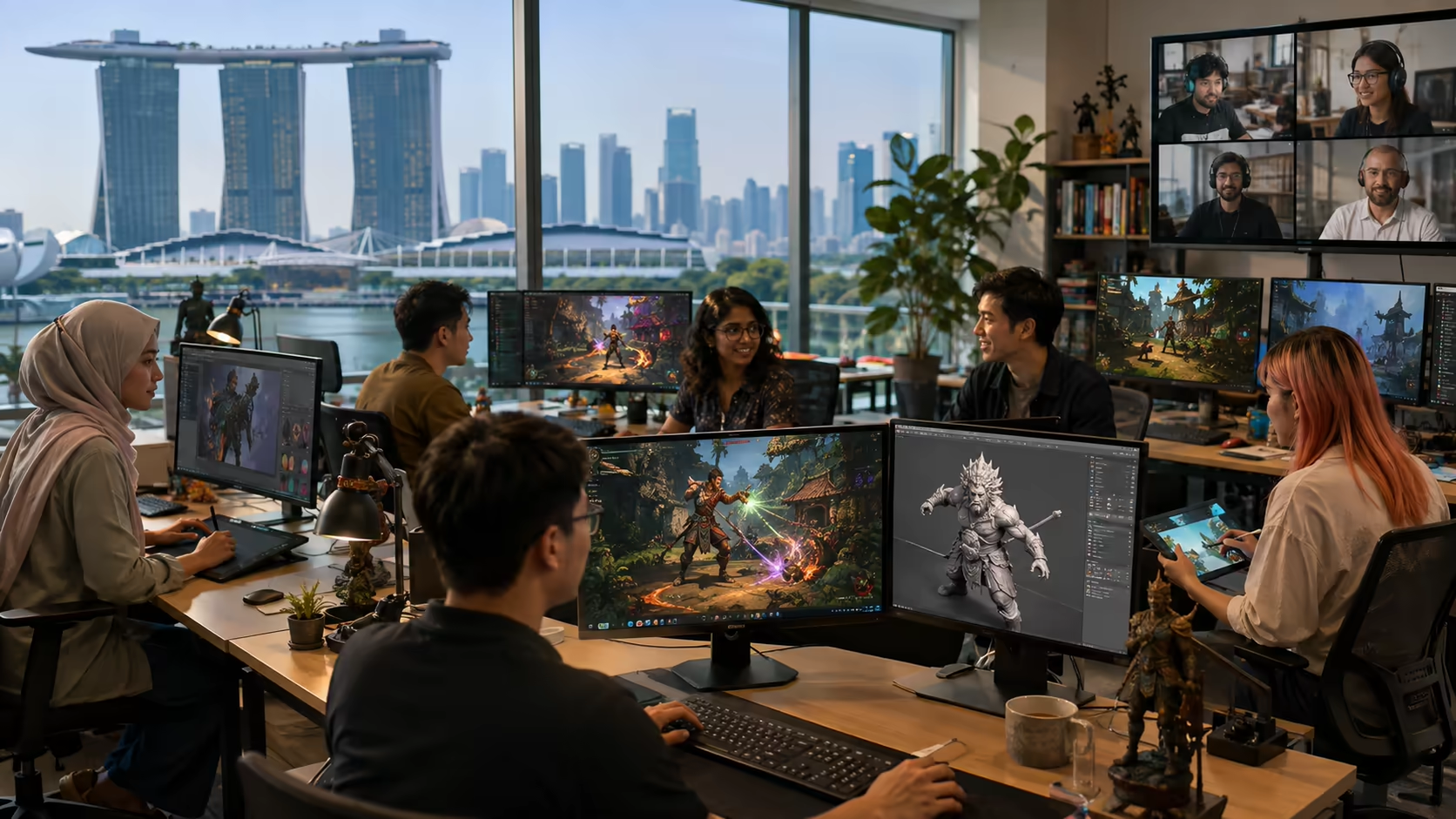
A Three-Continent Strategy
Singaporean game developers no longer treat international expansion as an afterthought. In 2026, studios based in the island republic are targeting three distinct player bases simultaneously: the high-spending US market, the mature European PC and console audience, and the fast-growing mobile-first Southeast Asian region. This tri-continental approach requires more than translation—it demands cultural fluency and adaptive game design.
Newzoo’s 2026 Global Games Market Report projects the worldwide games market to reach USD 213.6 billion in 2026, with Southeast Asia alone growing 9.4% year-on-year. Access Newzoo’s 2026 report here. Singaporean studios are capturing a slice of that growth by positioning themselves as neutral cultural brokers.
Localization as Core Design, Not a Patch
Take Coffee Talk Episode 3: Orchid & Ember, developed by Toge Productions’ Singapore arm. The game’s narrative includes a Singaporean kopitiam setting but avoids dialect-heavy jokes that would confuse Western players. Instead, the team uses environmental storytelling—hawker stall signage, HDB corridor aesthetics—to convey local flavor without relying on text. The result: 61% of sales came from North America and Europe, while Southeast Asia contributed 22%, according to the studio’s 2026 post-launch data.
Similarly, Afterlove EP, a visual novel by Pikselnesia and published by Fellow Traveller, uses Singapore’s indie music scene as a backdrop. Players in Germany and Canada praised the game’s emotional honesty, proving that hyper-local authenticity can drive global engagement when paired with universal themes of loss and identity.
Regional Publishing Hubs and Data-Driven Iteration
Singapore’s strategic location allows developers to run live beta tests across three time zones without significant latency. Studios like Mojiken’s Singapore satellite office use player behavior data from Indonesian, Vietnamese, and Thai early access builds to adjust difficulty curves before launching in the US. This “Southeast Asia first, West second” sequencing reduces the risk of costly flops.
Government agency Enterprise Singapore has also set up overseas game showcases in Los Angeles, Cologne, and Tokyo. In 2025, these events facilitated 44 publishing deals worth an estimated SGD 78 million. Many deals involve hybrid revenue models—premium PC sales in the West, free-to-play with ads in Southeast Asia—reflecting the nuanced market understanding that Singaporean teams have developed.
The Rise of Dual-Market IP
A new trend in 2026 is the creation of dual-market IP: games that launch simultaneously as premium titles on Steam and as free-to-play mobile versions in emerging markets. Singaporean startup Lionfish Games is piloting this with Sky Fortress: Aether War. The PC version retails for USD 29.99, while the mobile edition monetizes through cosmetic skins and battle passes. Early data shows the mobile version earns 3.2x more daily active users in Indonesia and the Philippines than the PC version does globally.
This flexible IP strategy, supported by Singapore’s strong data analytics talent, is attracting attention from global publishers who see the city-state as a low-risk testing ground for hybrid monetization.