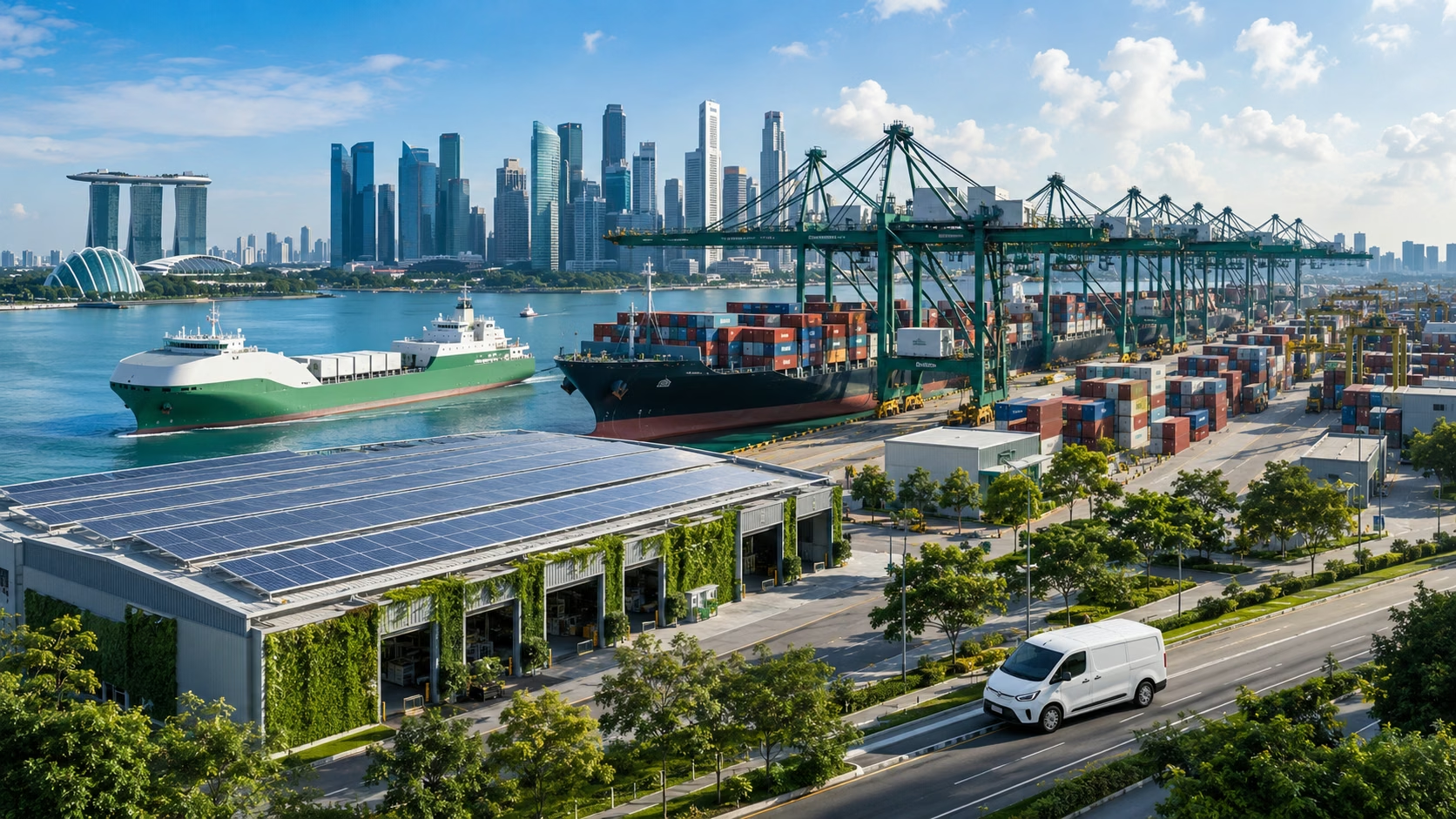
While the global headlines often feature mega-carriers and port operators, the true dynamism of Singapore’s logistics landscape lies in its ecosystem of specialized, agile players. These boutique firms are proving that in the modern supply chain, size is less important than precision. By focusing on niche markets, particularly the booming e-commerce and perishables sectors, these Singaporean companies are solving problems that giants often find too complex or too low-margin to handle.
E-Commerce Enablement: The Long Tail of Logistics
The surge in cross-border e-commerce has created a logistical headache for retailers. Consumers in Europe or the US expect rapid delivery from Asian suppliers, but navigating the customs, labeling, and last-mile complexities of multiple countries is daunting. This is where Singapore’s specialized fulfillment companies excel.
Unlike traditional freight forwarders that operate on port-to-port models, these Singaporean firms offer “direct-to-consumer” (D2C) logistics. They manage micro-fulfillment centers where products are not just stored, but finished—customs documentation is prepared, packaging is localized, and returns are processed. This capability turns Singapore into a launchpad for brands entering the lucrative Southeast Asian digital market, which is projected to exceed hundreds of billions in gross merchandise value by 2026.
The Art of Perishable Logistics
Another niche where Singaporean firms dominate is the handling of high-value perishables. The complexity of moving fresh seafood from Indonesia to fine-dining restaurants in Tokyo or flowers from the Netherlands to Australian weddings requires a blend of cold chain science and speed.
Singapore’s air freight forwarders have developed proprietary algorithms that predict flight delays based on weather patterns and airport congestion, allowing them to reroute cargo in real-time. This level of service transforms logistics from a cost center into a value proposition for producers who can now access premium markets without the risk of spoilage.
Technology as the Great Equalizer
For these smaller players, technology is not a luxury; it is a survival mechanism. The adoption of cloud-based Transport Management Systems (TMS) allows a 50-person firm in Singapore to manage a fleet of trucks in Thailand and a warehouse in the Philippines with the same efficiency as a multinational corporation.
According to industry data from Enterprise Singapore, SMEs in the logistics sector that adopted AI-driven inventory management tools saw a 20% reduction in holding costs in 2026. This lean approach allows them to offer competitive pricing while maintaining the personalized service that global shippers often lack.
The Future is Specialized
As global trade becomes more fragmented and consumer demands more specific, the role of these specialized Singaporean firms will only grow. They represent the adaptability of the Singaporean economy—pivoting from mass-market transit to high-touch, high-tech service provision. They are the proof that in the logistics game, agility often beats size.