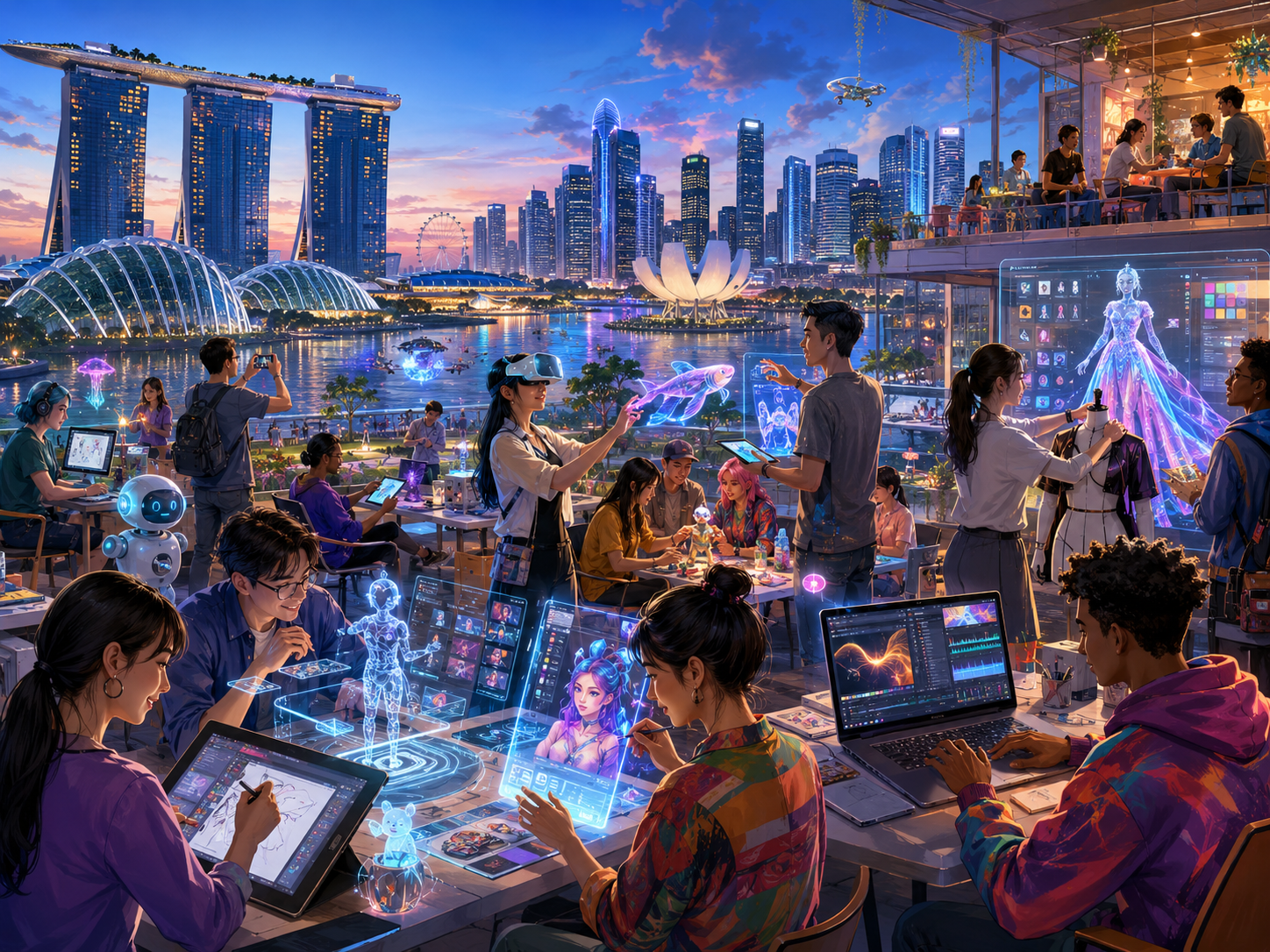
Singapore has positioned itself as a strategic center for innovation in Asia, and one of the most interesting developments is the growth of start-ups that combine technology with creative industries. These businesses operate at the intersection of art, design, software, storytelling, entertainment, marketing, and user experience. Their success reflects a broader shift in the global economy, where creativity is becoming more valuable when supported by strong digital capabilities.
Creative start-ups in Singapore are not limited to one sector. Some focus on digital media production, while others work in gaming, animation, music technology, fashion technology, advertising technology, virtual events, or immersive experiences. What connects them is their ability to use technology as a creative engine. Software helps them produce faster, reach wider audiences, understand user behavior, and develop new business models.
For example, a start-up in the fashion industry may use artificial intelligence to predict trends, 3D modeling to design garments, and e-commerce platforms to sell directly to customers. A music-tech company may build digital tools for artists to distribute songs, manage royalties, or connect with fans. A creative agency may use data analytics to design campaigns that match the preferences of specific consumer groups. These examples show how technology can strengthen creative output rather than limit it.
Singapore is especially attractive for this kind of entrepreneurship because it offers stability, connectivity, and strong infrastructure. The country has fast internet networks, reliable business regulations, access to investors, and proximity to major Asian markets. For start-ups, this means they can test products locally while planning regional expansion. Many creative businesses use Singapore as a base to serve clients across Southeast Asia, where digital consumption is growing quickly.
The role of talent is also important. Creative technology requires people who understand both artistic expression and digital systems. Singapore’s universities, polytechnics, media schools, design institutions, and coding programs contribute to a workforce that can support this hybrid industry. Designers, developers, animators, marketers, producers, and data specialists often work together in small start-up teams. This collaboration allows ideas to move from concept to execution quickly.
One of the most visible areas of growth is gaming and interactive entertainment. Singapore has become a home for studios and independent developers creating mobile games, educational games, virtual experiences, and e-sports-related platforms. Gaming combines visual design, storytelling, sound, psychology, software engineering, and monetization strategy, making it a strong example of technology-driven creativity.
Marketing and brand experience are also being transformed. Companies no longer rely only on posters, television commercials, or static online ads. They want campaigns that involve social media, interactive websites, live-streaming, virtual influencers, branded games, and personalized content. Creative start-ups are well-suited to deliver these services because they are flexible, experimental, and comfortable with digital culture.
Nevertheless, challenges remain. Singapore’s business costs can be high, and creative start-ups often need to compete with larger agencies, global platforms, and international studios. They must also keep up with rapid technological changes. A tool that feels advanced today may become ordinary within a short time, forcing founders to keep learning and innovating.
The future remains promising because demand for digital creativity continues to increase. As businesses, consumers, and public institutions seek more engaging ways to communicate, educate, entertain, and sell, creative start-ups in Singapore will play a larger role. Their ability to combine imagination with technical skill makes them essential players in the modern digital economy.