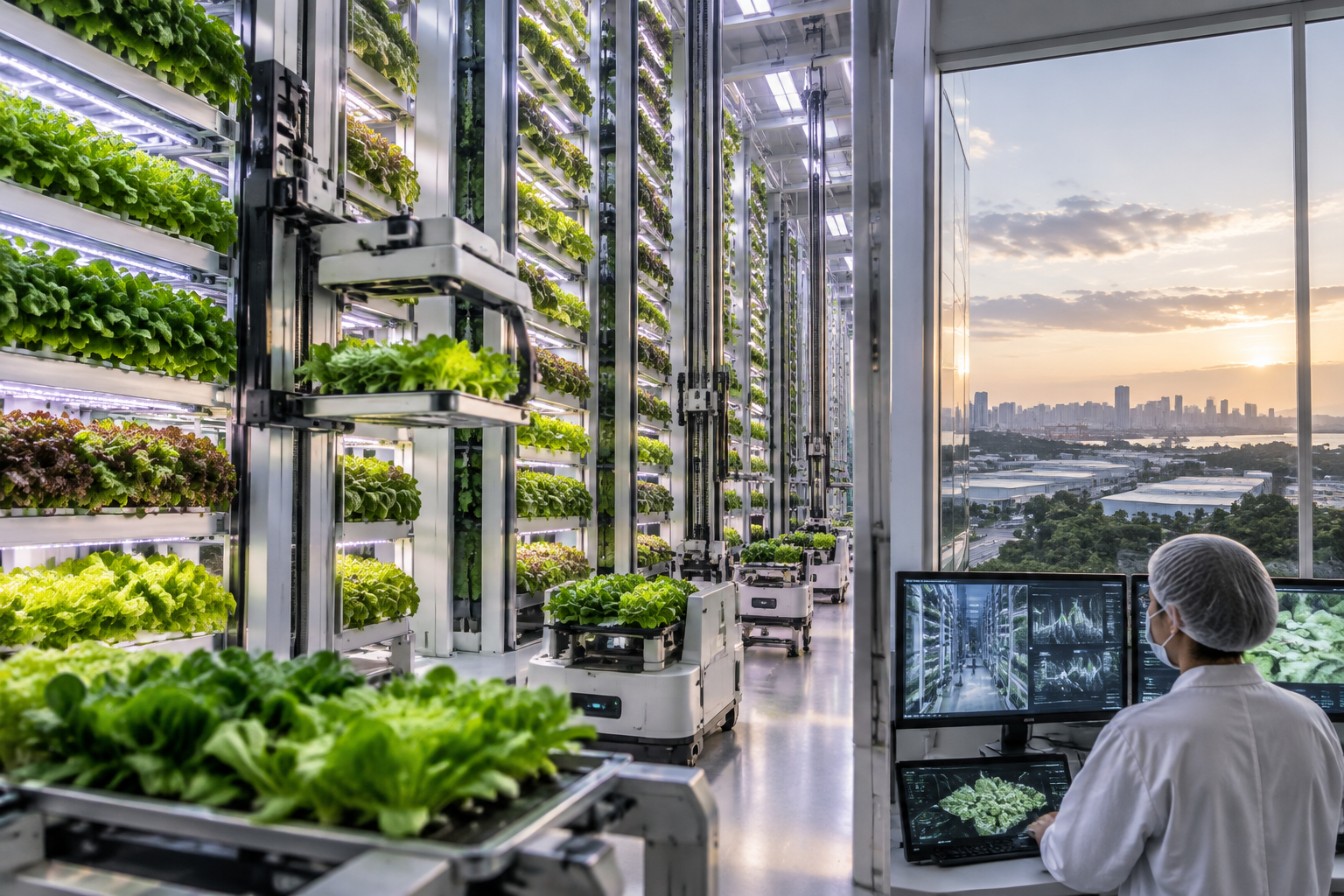
Revolutionizing Fish Farming with Smart Technology
While land-based farming captures headlines, Singapore’s aquaculture sector is undergoing a quiet but profound transformation. Off the Pasir Ris coast, fish farms like Singapore Aquaculture Technologies (SAT) are moving beyond traditional methods, employing a sophisticated network of sensors, alarms, and AI-driven analytics . These tools continuously monitor critical factors such as water flow, oxygen levels, pH, and even stress hormones in fish like barramundi, grouper, and red snapper .
This data-driven approach allows farmers to preemptively address issues that could compromise fish health and quality. As SAT’s CEO, Dirk Eichelberger, explained, a single pump failure in 2015 led to the loss of over 20,000 fish, a disaster that prompted a complete overhaul of their monitoring and automation systems . Today, real-time data and automated dosing help prevent such costly incidents, ensuring a more stable and high-quality supply of locally farmed fish.
A National Push for Aquafeed Innovation
Recognizing that feed is one of the most significant input costs in aquaculture, Singapore has taken a strategic step to strengthen its capabilities. In June 2026, the Singapore Food Agency (SFA) and the Singapore Institute of Technology (SIT) announced the establishment of the Feed and Feed Ingredient Technology Centre (F2TC) . This dedicated R&D center focuses on developing feed technology and nutrition for tropical marine species, aiming to enhance the productivity of local farms .
The F2TC will serve as a one-stop platform for feed formulation, nutrition modelling, and pilot-scale production. It will leverage AI-driven models to study feed acceptance and improve feed efficiency, addressing structural challenges like feed dependency and disease in the regional aquaculture sector . This initiative is a cornerstone of Singapore’s strategy to build a more resilient and self-sufficient protein supply.
The Impact on Local and Regional Food Systems
The advancements in Singapore’s aquaculture technology have implications far beyond its shores. Asia accounts for 90% of global aquaculture production, and the innovations developed at F2TC could play a significant role in addressing common challenges faced by the sector regionally . By improving feed efficiency and fish health, Singapore is not only securing its own protein sources but also contributing to the sustainability of a vital global industry.
The integration of smart farming techniques and a strong research foundation demonstrates Singapore’s comprehensive approach to food security. By investing in both the technology for immediate production and the research for long-term sustainability, the nation is building a blue economy that is resilient, innovative, and capable of meeting future challenges.