While the world focuses on the movement of physical cargo, the movement of paper documents remains a silent bottleneck in global logistics. For decades, the Bill of Lading (BL)—the document that proves ownership of goods—has traveled by courier, often arriving after the ship has docked. This creates demurrage fees and security risks. In Singapore, a thriving ecosystem of fintech and maritime startups is on a mission to digitize this trade layer, using blockchain technology to usher in a new era of trust and speed.
The Shift to Electronic Bills of Lading (eBL)
The pandemic accelerated a trend that was already brewing in Singapore’s legal frameworks. The city-state’s Infocomm Media Development Authority (IMDA) has been instrumental in supporting the TradeTrust framework, a digital utility that connects different trade platforms. Startups building on this infrastructure are solving the interoperability problem that previously killed eBL adoption.
Unlike proprietary systems that require all parties to be on the same software, TradeTrust-compliant platforms use open standards. This means a shipper in China using Platform A can transfer ownership of the cargo to a buyer in Europe using Platform B, as long as both adhere to the Singaporean standard. This open architecture is crucial because logistics involves thousands of SMEs who cannot afford to pay for multiple proprietary licenses.
Smart Contracts and Auto-Execution
The real value proposition for Singapore startups lies not just in transferring the PDF of the bill, but in making the document “smart.” By linking the eBL to a Smart Contract on a blockchain, payments can be automated. For instance, if a shipment of perishables from Indonesia to Japan is tagged with IoT sensors, the Smart Contract can automatically release payment to the exporter the moment the ship crosses a certain GPS coordinate and the temperature log is verified.
This convergence of IoT data and blockchain finance is reducing the risk for banks. Singapore has positioned itself as the trade finance hub of Asia, and banks like DBS are actively partnering with these startups. By reducing the risk of fraud (a rampant issue with physical bills), digital documentation lowers the cost of borrowing for traders.
Addressing Cybersecurity and Trust
For many traditional shippers, the “security” of a physical piece of paper is hard to let go of. Singaporean startups are addressing this by implementing Decentralized Identifiers (DIDs). These allow shipping lines and freight forwarders to verify the identity of the signatories without revealing sensitive personal data on the public chain. It provides a digital fingerprint that is more secure than a wet ink signature.
The legal recognition of these documents is also hardening. The Singapore Electronic Transactions Act (ETA) has been amended to explicitly recognize electronic transferable records, giving bankers and logistics players the confidence to dispose of the filing cabinets. This regulatory certainty is a primary reason why global shipping lines are choosing Singapore as the jurisdiction to pilot their digital documentation rollouts.
The Road Ahead for Frictionless Trade
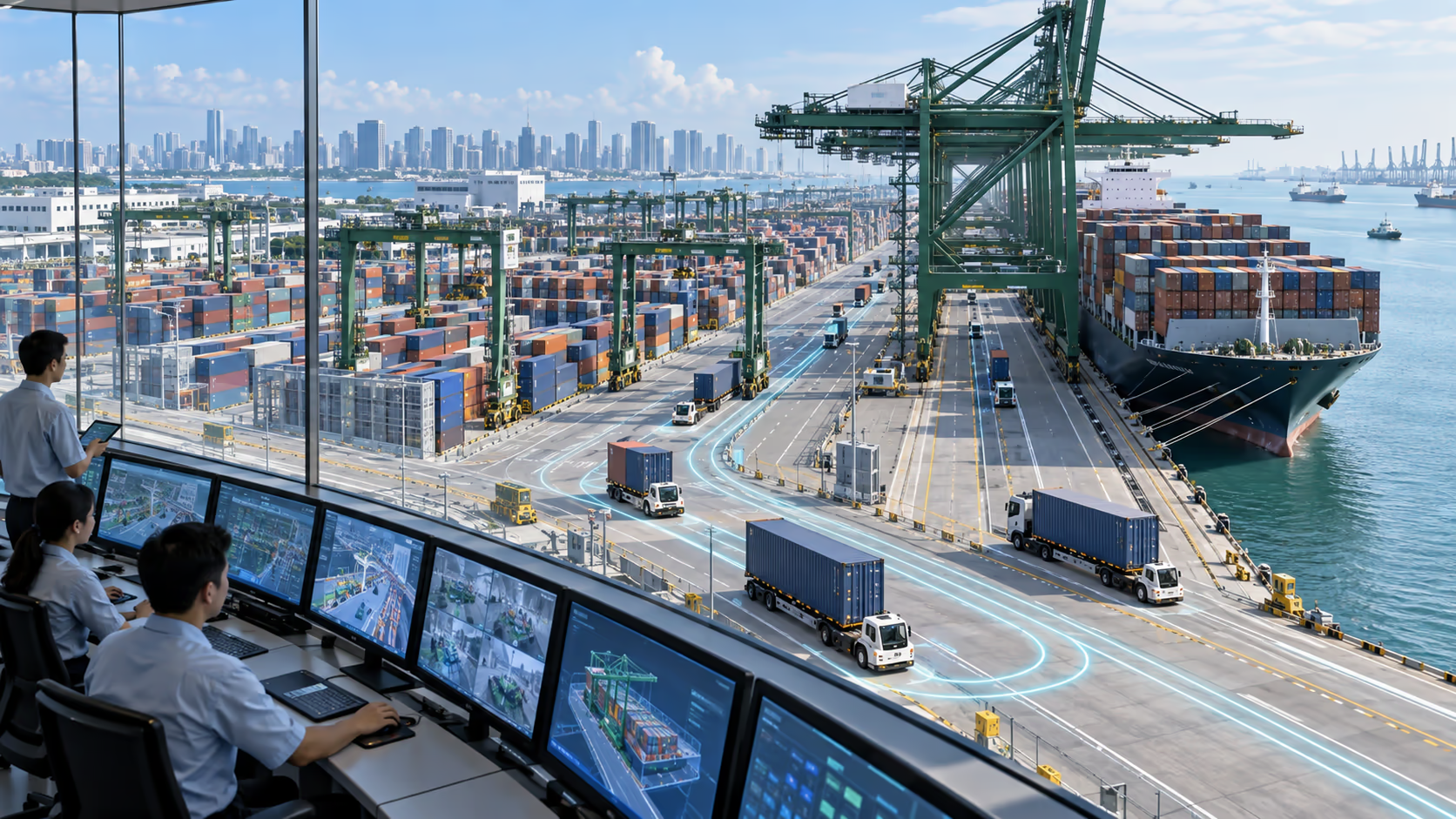
The ambition in 2026 is “silent commerce”—where the goods move and the data and money follow automatically without manual intervention. By removing the administrative friction from the port, Singapore’s startups are ensuring that the physical speed of the port is matched by the virtual speed of the business environment.