Singapore’s Tourism Model Is Becoming More Integrated
Singapore’s tourism industry in 2026 is supported by a highly connected network of companies rather than a single dominant sector. Aviation, hospitality, attractions, retail, technology, events, and transport work together to create a visitor experience that is fast, premium, and commercially productive.
The Singapore Tourism Board’s official statistics and market insights page, available at https://www.stb.gov.sg/, remains a key reference point for tracking visitor arrivals, tourism receipts, and market performance. For businesses, this kind of data matters because it helps determine hotel pricing, airline capacity, attraction planning, and event strategy.
Aviation Companies Anchor International Demand
Changi Airport Group and Singapore Airlines
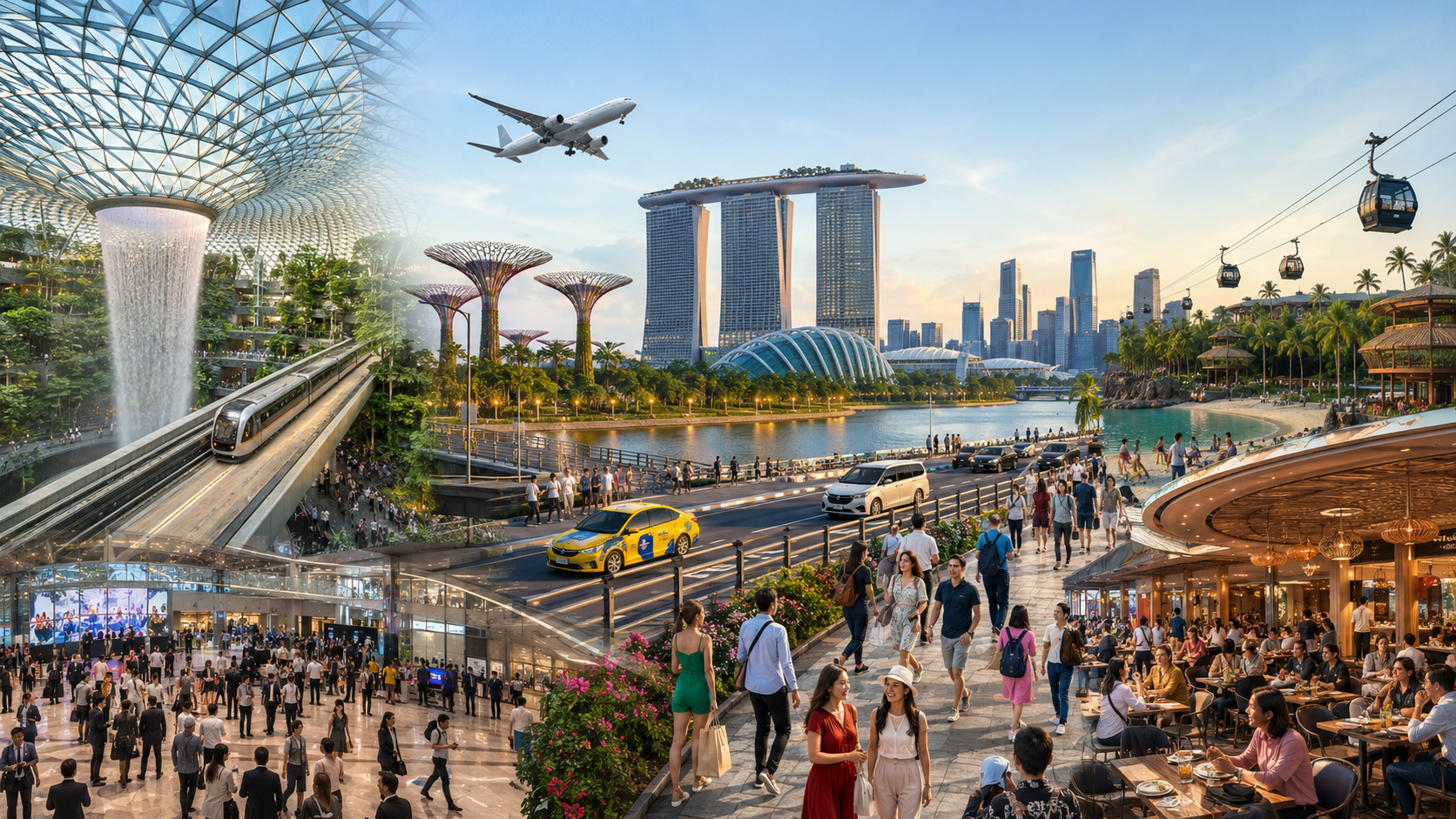
Changi Airport Group is one of the strongest foundations of Singapore tourism. The airport is not only a transport facility but also a commercial and lifestyle destination. Jewel Changi Airport, with its indoor waterfall, retail mix, and dining options, turns transit time into a tourism experience.
Singapore Airlines strengthens this ecosystem by connecting Singapore to major long-haul and regional markets. Its global brand supports the country’s reputation for service quality, efficiency, and reliability. Together, the airport and airline sectors ensure that Singapore remains accessible to business travelers, leisure visitors, cruise passengers, and regional tourists.
Hospitality Groups Shape the Spending Economy
Integrated Resorts and International Brands
Hotels play a strategic role in converting arrivals into tourism receipts. Marina Bay Sands and Resorts World Sentosa are major examples because they combine accommodation with entertainment, shopping, dining, conventions, and attractions. Their integrated model encourages visitors to spend more within a single precinct.
Global hotel companies such as Marriott, Hilton, Accor, IHG, and Pan Pacific Hotels Group also help diversify Singapore’s accommodation market. Luxury travelers, corporate guests, families, solo visitors, and stopover tourists can all find products that match their budgets and expectations. This range is important because Singapore competes not on cheap travel, but on value, safety, convenience, and quality.
Attractions Are Moving Beyond Traditional Sightseeing
Experience-Led Tourism in 2026
Singapore’s attractions are increasingly designed around immersive experiences. Gardens by the Bay, Mandai Wildlife Group, Sentosa, National Gallery Singapore, and Marina Bay lifestyle zones create reasons for visitors to extend their stay.
A real and current context is the growing demand for nature-based and family-friendly tourism. Singapore has responded by investing in wildlife parks, waterfront spaces, green corridors, and curated leisure precincts. This helps the country appeal to visitors who want more than shopping malls and skyline photography.
Transport and Technology Make the Destination Work
The Hidden Companies Behind Smooth Travel
Transport providers such as SMRT, SBS Transit, ComfortDelGro, and Grab support Singapore’s reputation as an easy destination to navigate. Their services connect airports, hotels, attractions, shopping districts, and event venues with minimal friction.
Digital platforms also influence tourism decisions. Booking engines, mobile payment providers, ride-hailing apps, and restaurant reservation tools shape how tourists plan, move, and spend. For a compact city-state, convenience is a competitive advantage, and technology companies help turn that advantage into measurable visitor satisfaction.
MICE Operators Bring High-Value Visitors
Singapore’s meetings, incentives, conventions, and exhibitions sector remains one of the most valuable parts of its tourism economy. Sands Expo and Convention Centre, Suntec Singapore, and Singapore EXPO attract international trade shows and corporate gatherings. These events fill hotels, support restaurants, boost retail, and create global visibility.
In 2026, Singapore’s tourism industry is best understood as a coordinated business ecosystem. The companies behind it are not only serving tourists; they are helping Singapore maintain its position as one of Asia’s most efficient, premium, and commercially resilient destinations.