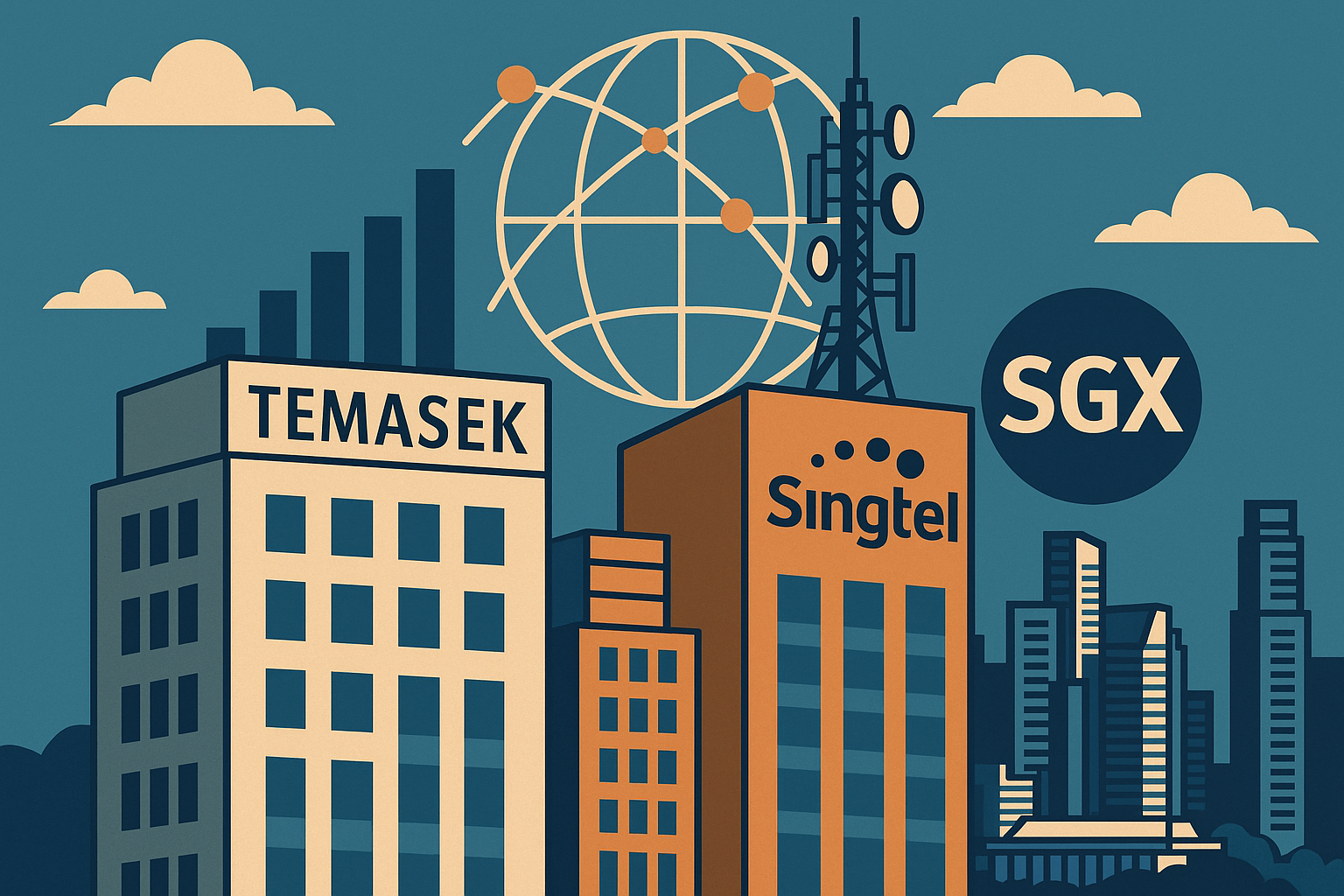
When investors talk about the “largest players” in Singapore’s equity landscape, they often mean more than just market capitalization. Temasek and Singtel are significant because of their influence on governance standards, dividend culture, and risk appetite across the market. Examining these two entities side by side reveals how Singapore has tried to foster both stability and innovation.
Temasek’s governance model emphasizes clear accountability despite its state ownership. It has an independent board that oversees strategy, risk, and performance; it commissions external audits; and it reports on portfolio value, sector exposure, and long-term returns. These practices are designed to reassure both domestic and international stakeholders that Temasek is commercially driven, not a tool for short-term political objectives. Its willingness to publish performance over multi-year cycles reinforces the long-horizon approach.
The companies in which Temasek invests often feel pressure to meet high governance standards. Singtel is a prime example. As a major shareholder, Temasek expects professional management, board independence, and robust internal controls. This has helped set benchmarks in Singapore for disclosure quality, shareholder communication, and alignment of executive incentives with long-term value creation. The knock-on effect is that other listed firms are encouraged to upgrade their own practices to attract capital and index inclusion.
From an income perspective, Singtel has historically been one of the SGX’s core dividend counters. Its telecom operations generate steady cash flows that have supported regular payouts, making the stock attractive to income-seeking investors such as retirees and yield-focused funds. That said, the dividend profile is not static. Shifts in capital expenditure requirements—especially for spectrum purchases and 5G deployment—can affect how much free cash flow is available for distribution. Management must weigh the desire for stable dividends against the need to invest in future networks and new digital services.
Risk management is another area where Temasek and Singtel intersect. Temasek itself is exposed to macroeconomic cycles, currency movements, regulatory shifts, and sector-specific shocks across its global portfolio. It manages these risks through diversification, stress testing, and prudent leverage. Singtel, as part of Temasek’s portfolio, contributes telecom and digital infrastructure risk, which is partly offset by other holdings in financials, consumer, or industrials. This portfolio context matters: a negative development at Singtel may be cushioned at the Temasek level, reducing systemic impact.
For Singtel as a standalone company, risk management plays out through geographic and business-line diversification. Its overseas associates provide growth, but also introduce political risk, regulatory unpredictability, and currency volatility. Domestically, Singtel faces competition from rival operators and new entrants, including virtual operators and over-the-top service providers. It must manage technology risk as well, ensuring that investments in 5G, fiber, and digital platforms stay relevant in a fast-changing environment.
In the eyes of the market, Temasek’s backing often provides a perception of resilience. Investors may assume that a Temasek-linked company is less likely to pursue reckless strategies or face funding difficulties. However, this does not mean immunity from share price declines or operational setbacks. Singtel’s valuation still responds to earnings performance, regional telecom cycles, and shifts in investor appetite for defensive versus growth stocks.
By viewing Temasek and Singtel through the lenses of governance, income generation, and risk, investors can better understand why these entities occupy such prominent roles in Singapore’s market narrative. They demonstrate how state-linked capital and public markets can coexist, with each influencing the other’s behavior and helping shape a relatively transparent, disciplined investment environment.