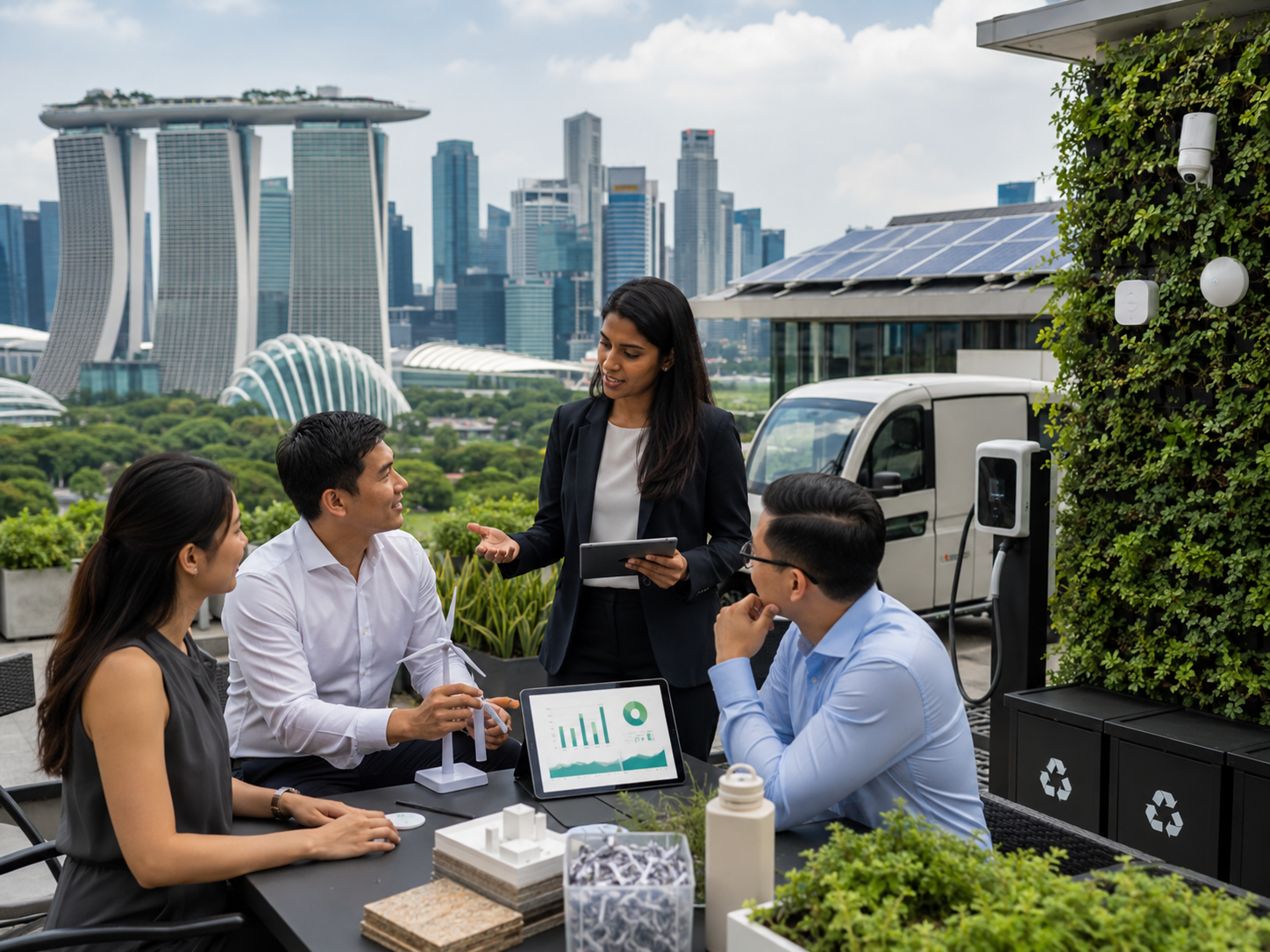
A Small Country With a Big Sustainability Mandate
Singapore’s environmental transition is shaped by a simple reality: the country must do more with less. It has limited land, few natural resources, and a dense urban economy that depends on energy-intensive buildings, ports, transport, and supply chains. This has created fertile ground for technology start-ups that can make sustainability measurable, efficient, and commercially viable.
Rather than relying only on large infrastructure projects, Singapore is increasingly turning to smaller technology firms that can move quickly. These start-ups are building software, sensors, materials, and platforms that help companies reduce emissions, conserve resources, and improve environmental reporting.
A key policy reference is the Singapore Green Plan 2030, the national sustainability roadmap published at https://www.greenplan.gov.sg/. Its priorities, including greener buildings, cleaner energy, sustainable living, and a resilient future, give entrepreneurs a clear direction for innovation.
Where Start-ups Are Making the Biggest Impact
Energy Intelligence for Buildings
Buildings are one of the most practical entry points for sustainability technology. In Singapore’s hot and humid climate, air-conditioning can be a major operating cost. Start-ups that use Internet of Things sensors, real-time monitoring, and AI-based optimisation help facility managers reduce energy waste without affecting comfort.
For example, a building analytics platform can detect when cooling is running too aggressively after office hours, when equipment is underperforming, or when occupancy patterns have changed. The result is not only lower emissions but also lower monthly operating costs. That commercial benefit is crucial because sustainability solutions scale faster when they solve financial problems too.
ESG and Carbon Reporting Platforms
Another high-growth space is environmental, social, and governance data. As supply chains become more closely scrutinised, businesses need credible emissions information. Start-ups offering carbon accounting software help companies move from estimated figures to more structured reporting.
This is especially relevant for small and medium-sized enterprises. Many SMEs supply larger corporations but lack sustainability teams. A digital platform can guide them through emissions categories, energy data, supplier inputs, and reduction planning. In practical terms, start-ups are making sustainability reporting accessible to firms that previously saw it as too complex.
The Circular Economy Becomes a Business Model
Singapore’s waste challenge is not theoretical. With limited landfill space, the country needs better ways to reduce, reuse, and recover resources. Start-ups are responding with food-waste analytics, recycling technologies, reusable packaging systems, and platforms that connect surplus materials with new buyers.
The strongest circular economy start-ups avoid vague environmental promises. They focus on measurable outcomes: fewer tonnes of waste sent for disposal, lower procurement costs, reduced packaging losses, or improved recycling purity. This makes their services easier for corporate clients to justify.
Real-World Context: From Pilot Projects to Regional Expansion
One reason Singapore is attractive for green start-ups is its ability to connect policy, capital, and corporate demand. A young company can test a solution in a controlled urban setting, work with government-linked institutions, and then use Singapore as a base for Southeast Asian expansion.
This is important because the region faces rising cooling demand, rapid urbanisation, food security concerns, and supply-chain emissions. A start-up that proves its model in Singapore can often adapt it for cities such as Jakarta, Bangkok, Ho Chi Minh City, or Manila.
Why Investors Are Paying Attention
Sustainability start-ups are no longer viewed only as mission-driven ventures. Many sit at the intersection of regulation, cost reduction, and risk management. Companies need to decarbonise, investors need credible data, and governments need scalable solutions. Singapore’s green start-up ecosystem is therefore becoming a practical engine for both climate action and economic competitiveness.