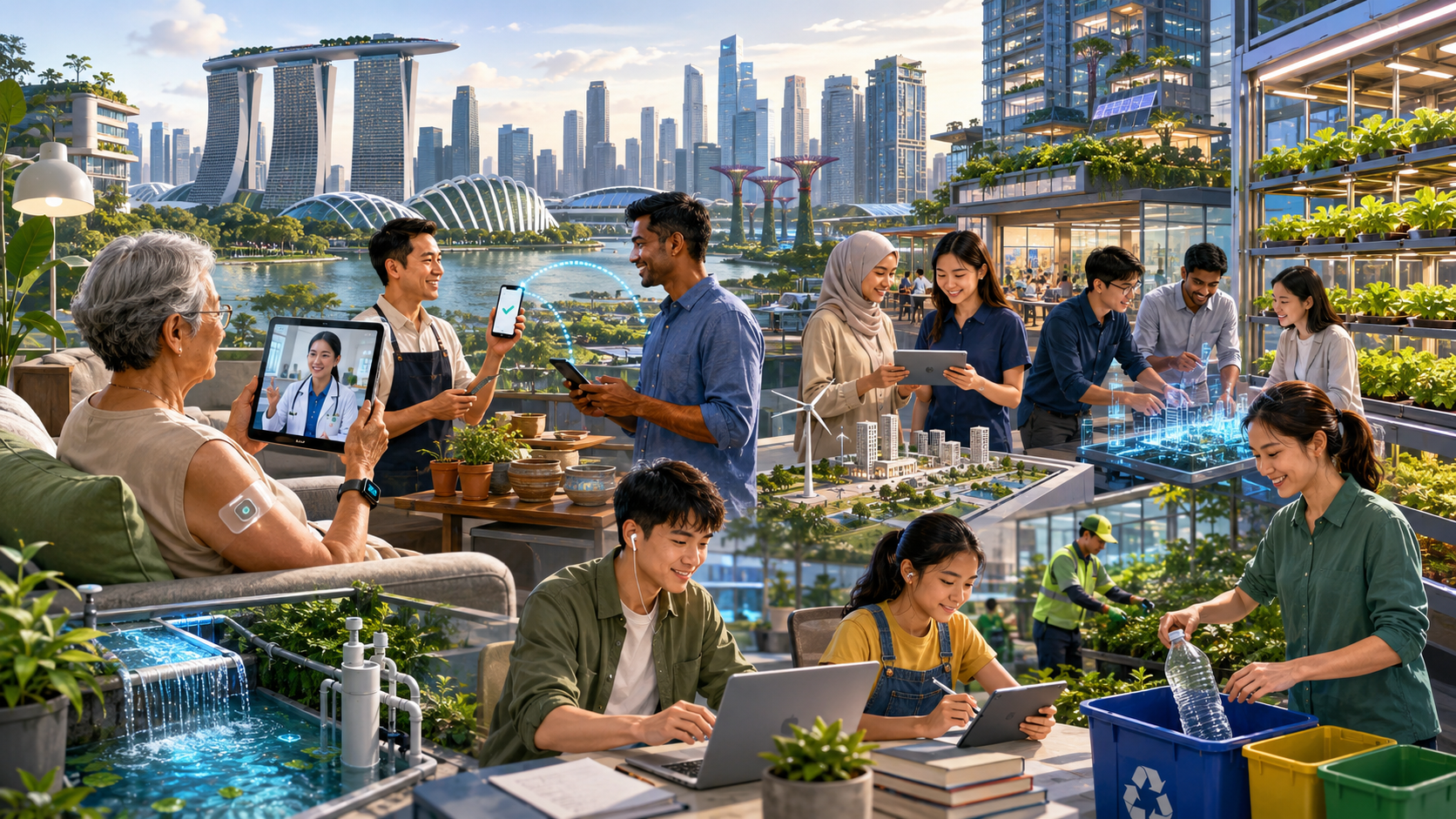
Singapore’s start-up ecosystem is no longer defined only by speed, investment, and digital disruption. A growing number of young companies are now using innovation to solve social problems. This trend reflects a wider shift in how entrepreneurship is understood. Start-ups are expected not only to scale quickly, but also to create value for communities. In Singapore, this approach is supported by advanced infrastructure, strong research institutions, public-sector interest in innovation, and access to regional markets across Southeast Asia.
Healthcare is one of the clearest examples of this movement. With an ageing population and rising demand for efficient care, start-ups are building tools that make health services more accessible and preventive. Telehealth platforms allow patients to consult doctors remotely, while digital monitoring systems help caregivers track elderly users at home. Artificial intelligence can support symptom checking, risk prediction, and medical workflow management. These solutions do not replace doctors, but they can improve efficiency and reduce delays. For families, especially those caring for elderly parents, health technology provides reassurance and practical support.
Start-ups are also reshaping the financial lives of people who are not fully served by conventional institutions. Singapore’s fintech sector includes solutions for small businesses, low-income users, migrant workers, and independent workers. Mobile-first financial services can simplify payments, reduce remittance costs, and help users manage savings. For small and medium-sized enterprises, digital platforms can automate accounting, provide credit assessment, and improve access to loans or insurance. This matters because many social problems become worse when people lack reliable financial tools.
Education is another space where start-ups are creating meaningful impact. The changing economy requires workers to learn new skills throughout their careers. Edtech companies in Singapore are responding with platforms for online courses, professional certificates, personalized tutoring, and career development. Some tools use data to adapt learning materials to each student’s pace. Others help teachers identify where students are struggling. For adult learners, flexible digital training can make reskilling easier, especially for those balancing work and family responsibilities.
Environmental innovation has also become a major trend. Singapore’s urban density and limited land have encouraged entrepreneurs to think creatively about sustainability. Start-ups are working on vertical farming, food-waste reduction, energy optimization, smart recycling, and water management. These solutions are not only relevant locally; they can also be applied in other crowded cities facing similar pressures. A technology that helps a building use less energy or helps a restaurant reduce waste may seem small, but when adopted widely, its social and environmental value can be significant.
What strengthens Singapore’s start-up landscape is the connection between policy, capital, and experimentation. Founders can benefit from innovation programs, partnerships with large companies, and opportunities to test ideas in controlled environments. However, start-ups solving social problems must be careful not to treat people as data points. Privacy, accessibility, affordability, and trust are central to success. A health app, finance platform, or learning tool must be understandable and usable by the people it is designed to help.
The most promising Singaporean start-ups are those that combine technology with empathy. Their products are built around real problems: elderly people needing safer care, workers needing better financial options, students needing flexible learning, and cities needing sustainable systems. This human-centered direction is what makes Singapore’s innovation scene especially relevant for the future.