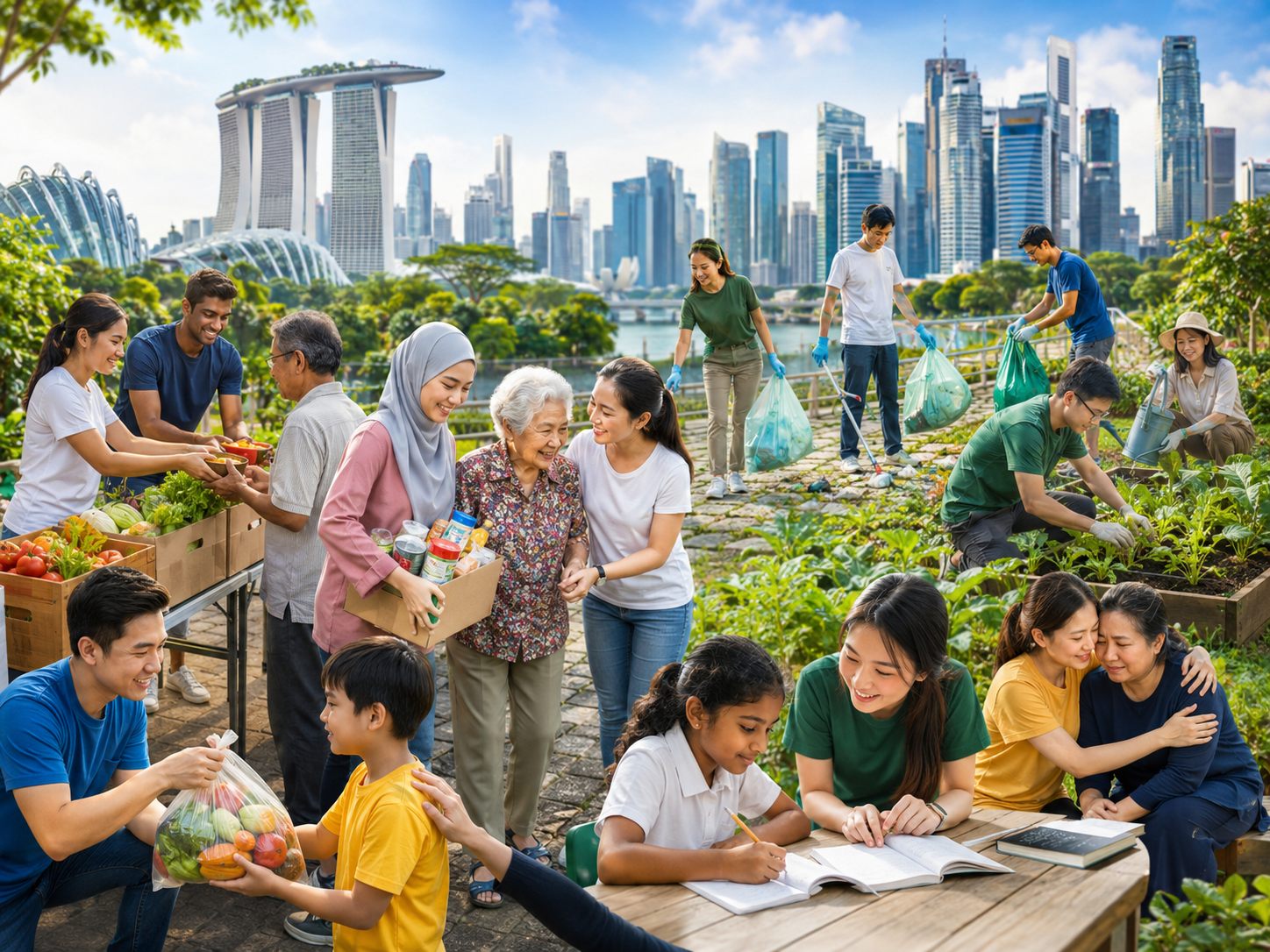
Non-profit organizations in Singapore have become essential partners in solving social and environmental challenges. While the country has achieved impressive progress in housing, education, public transport, and economic development, some problems still require close community-based attention. Non-profits respond to these needs by offering services, building awareness, and encouraging public participation. Their role is important because they combine compassion with practical action.
Social inequality is one of the key areas where non-profits make a difference. Singapore’s competitive economy creates many opportunities, but not everyone benefits equally. Low-income families may face difficulties paying for food, school expenses, healthcare, or housing-related costs. Non-profit organizations support these households through food banks, emergency financial assistance, education programs, and family services. By addressing both short-term needs and long-term development, they help people move toward greater stability.
Education support is another valuable contribution. Some children from disadvantaged backgrounds may lack access to enrichment activities, private tuition, or learning resources. Non-profit groups provide academic mentoring, digital access, reading programs, and confidence-building activities. These efforts reduce educational gaps and give young people a stronger foundation for future success. Education-focused non-profits also support parents by helping them understand school systems and child development.
Mental health has also become a major concern in Singapore. High work demands, academic pressure, caregiving responsibilities, and social expectations can affect emotional well-being. Non-profit organizations provide helplines, counseling, peer support groups, and public awareness programs. Their work helps normalize conversations about mental health and encourages people to seek help earlier. This is especially important because stigma can prevent individuals from speaking openly about their struggles.
Another important contribution is support for persons with disabilities. Non-profit organizations offer therapy services, employment training, social inclusion programs, caregiver support, and public education. These initiatives help people with disabilities participate more fully in society. They also encourage employers, schools, and communities to become more inclusive. Instead of viewing disability only through a medical lens, many non-profits promote dignity, independence, and equal opportunity.
Environmental non-profits in Singapore focus on protecting natural spaces and promoting sustainable lifestyles. Although Singapore is highly urbanized, it still has valuable biodiversity in parks, nature reserves, mangroves, and coastal areas. Conservation groups raise awareness about native wildlife, habitat protection, and responsible interaction with nature. They may organize guided walks, citizen science projects, clean-up activities, and educational campaigns. These efforts help residents understand that nature is not separate from city life but part of a healthy urban environment.
Waste reduction is another major focus. Singapore has limited land for waste disposal, making recycling and consumption habits especially important. Non-profit organizations encourage residents and businesses to reduce single-use plastics, repair items instead of throwing them away, donate usable goods, and separate recyclables properly. Through workshops and community campaigns, they help people see how daily choices affect the environment.
Non-profits are also effective because they often build trust within communities. Their staff and volunteers work directly with residents, listen to concerns, and design programs based on real needs. This local connection allows them to respond with empathy and flexibility. In many cases, they become a bridge between vulnerable individuals and larger institutions such as hospitals, schools, employers, or government agencies.
The impact of non-profit organizations goes beyond the number of meals delivered, trees planted, or workshops conducted. Their deeper value lies in creating awareness, empathy, and shared responsibility. They encourage people to think beyond personal success and consider the well-being of others. In a fast-moving society like Singapore, this human-centered work is essential for building a community that is resilient, inclusive, and environmentally conscious.