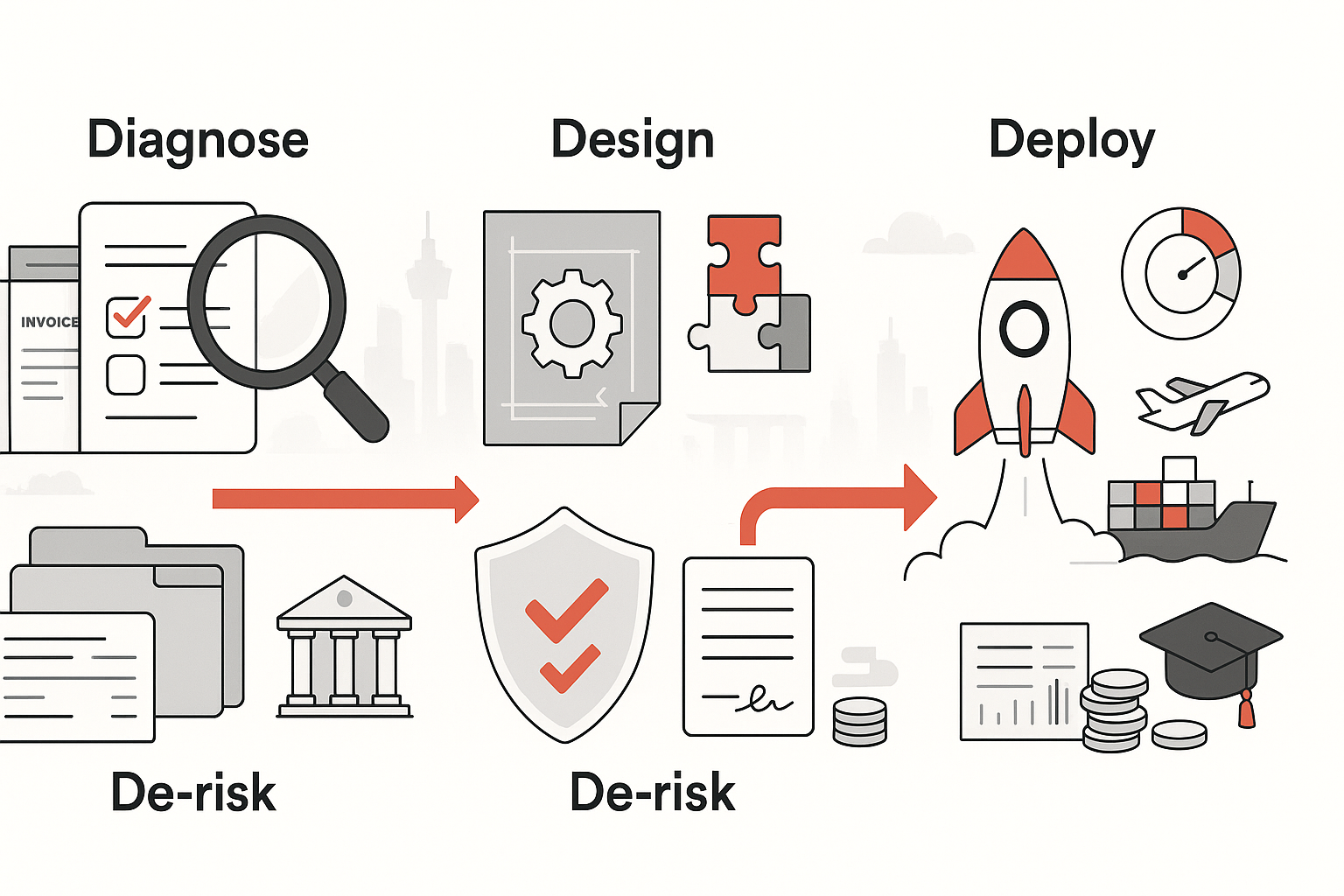
If you’re a founder in Singapore, think of public support as a layered architecture you can assemble over time. Each layer solves a different bottleneck—basic digital tools, strategy and processes, market entry, and financing. Sequence them well and you reduce risk, conserve cash, and accelerate learning.
Layer 1: Basic digital plumbing. The Productivity Solutions Grant (PSG) funds pre‑approved software and equipment, curated per industry under SMEs Go Digital. The goal is to stabilise transaction flows—sales, invoicing, inventory, payroll—so you stop bleeding time on manual tasks. Because PSG solutions are standardised, onboarding is quick and outcomes are predictable.
Layer 2: Deep capability build. The Enterprise Development Grant (EDG) supports more ambitious projects: rethinking your operating model, building data pipelines, adopting automation, designing new products, or crafting a go‑to‑market strategy. These projects typically involve consultants or technology partners and have clear KPIs—cycle‑time reduction, error‑rate cuts, unit cost improvements, or new revenue channels.
Layer 3: Internationalisation. The Market Readiness Assistance (MRA) grant offsets eligible costs for overseas marketing, distributor search, or trade fair participation. It’s well‑suited for testing product‑market fit in a new geography without overcommitting. Pair this with EnterpriseSG’s in‑market networks to refine pricing, packaging, and compliance.
Layer 4: Capital. The Enterprise Financing Scheme (EFS), delivered via banks, underwrites a portion of loan risk so lenders can extend facilities for working capital, trade, fixed assets, projects, or venture debt. Use working capital lines to smooth cash cycles, trade loans for import/export flows, and fixed asset financing for equipment or property. Expect normal bank diligence—financial statements, projections, security, and management track record.
Early‑stage innovators should also scan the Startup SG suite (e.g., Founder grants, co‑investment, and talent‑oriented programmes) that blend funding with mentorship. For people development, SkillsFuture course subsidies and the SkillsFuture Enterprise Credit (SFEC) help defray upskilling and enterprise transformation costs, complementing your project grants.
How to decide what to apply now versus later? Start with a short diagnostic: (1) where are the time sinks and error hotspots; (2) which processes drive customer value; (3) what growth hypothesis are you testing next; (4) how much risk can your cash flow carry. Map initiatives to these answers. PSG handles quick wins; EDG tackles structural change; MRA validates new markets; EFS funds scale.
Application hygiene matters. Apply before committing to vendors, craft a tight problem statement, include two or more comparable quotes where relevant, spell out milestones, and quantify impact. Keep procurement files, timesheets, and delivery evidence tidy. Be mindful of “double dipping”—the same cost item usually cannot be funded by multiple grants. Finally, policies evolve with each Budget cycle, so confirm current parameters with EnterpriseSG, IMDA, and your bank before you lock plans.