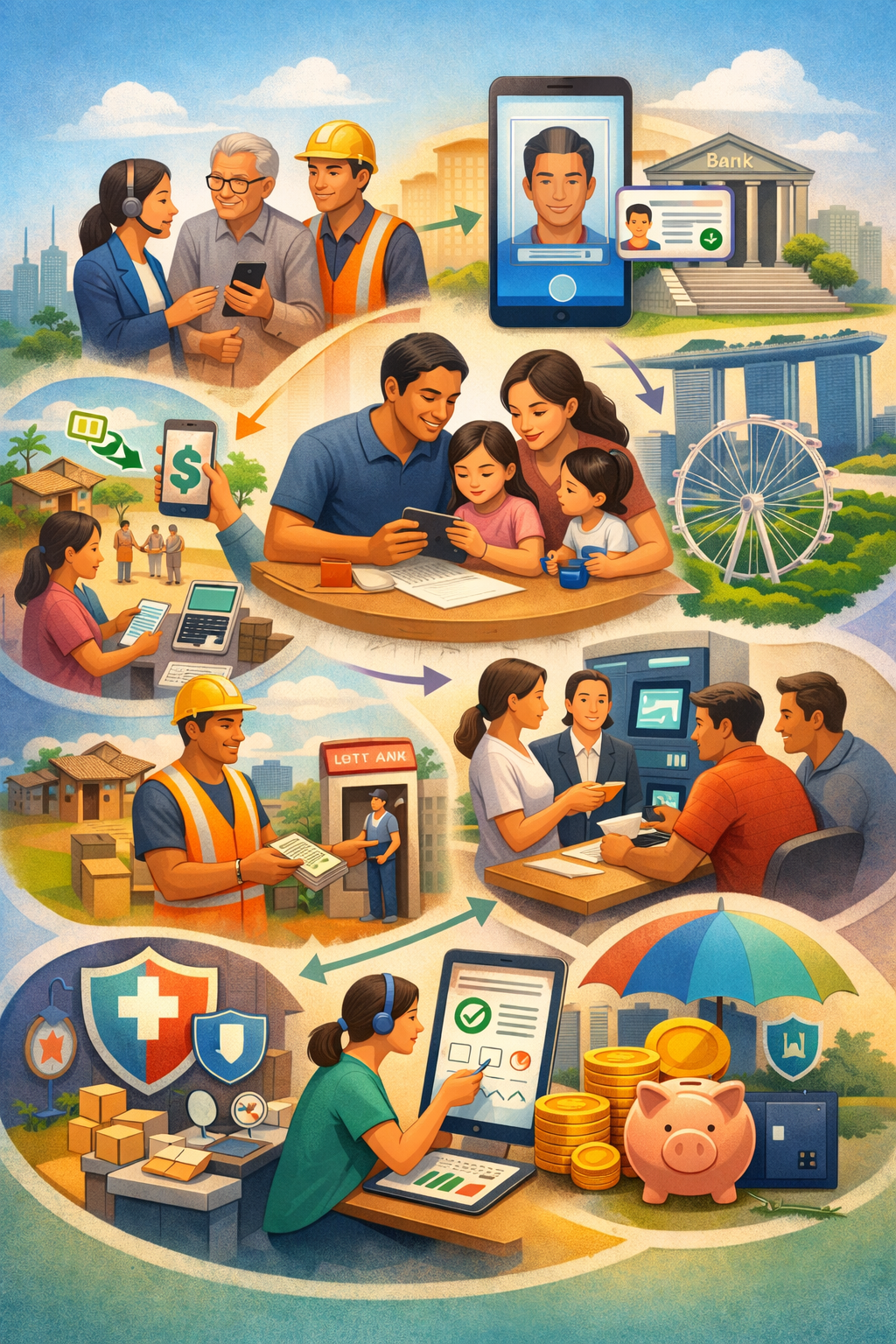
Financial inclusion is easiest to understand through situations people face. In Singapore, a “banked” society can still produce unbanked or underbanked pockets—where individuals technically have options, but those options don’t work well for their needs. Looking at real-life use-cases shows where the friction sits and what inclusive banking should deliver.
Use-case 1: The senior who avoids mobile banking
A retiree may have a bank account but still pay bills in cash or with in-person assistance because apps feel confusing and scams feel rampant. For this group, inclusion means: simple interfaces, step-by-step transaction confirmation, easy access to human support, and fraud safeguards that do not lock users out unnecessarily. Features like transaction limits, clear alerts, and “trusted contacts” can help seniors participate digitally while feeling protected.
Use-case 2: The low-income worker managing tight cash flow
A person living paycheck to paycheck may worry about fees, minimum balances, or penalties. Even small charges can discourage account usage. Inclusive banking here focuses explained pricing, low-cost basic accounts, and tools that help smooth cash flow—like bill reminders, budgeting dashboards, and “set aside” features that separate rent money from daily spending. Small savings automation (even tiny amounts) can build resilience without forcing unrealistic targets.
Use-case 3: The migrant worker sending money home
For many migrant workers, the primary financial need is safe and affordable remittance. The pain points are not only fees but also exchange-rate spreads, availability of cash-in/cash-out locations, and the time it takes for family members to receive funds abroad. Inclusion improves when digital transfer options are transparent, competitively priced, and supported by clear dispute channels. Another important element is respectful customer experience—language support, straightforward instructions, and documents handled efficiently.
Use-case 4: The newcomer without local credit history
A newly arrived resident may open an account but struggle to access reasonably priced credit because they have no local track record. If the only options are secured products or expensive alternatives, they become underbanked. Fair pathways to credit can include small starter limits, responsible use education, and risk assessment that considers stable employment and payment behavior—while still protecting against overextension.
Use-case 5: The micro-merchant at a hawker stall
Small merchants may prefer cash due to habit or perceived costs of card acceptance. When payment systems are simple—such as QR-based acceptance—and settlement is fast, digital payments become attractive. This supports inclusion on both sides: customers can pay without cash, and merchants can build digital records that may help them access services like business accounts or insurance.
The role of regulation and consumer protection
Inclusion without protection can increase harm. Singapore’s strict approach to system safety and oversight is a major advantage, but it must translate into user-level support: fast scam response, clear liability rules, and education that teaches practical behaviors (spotting impersonation attempts, avoiding “remote access” scams, securing devices). If people believe digital banking is unsafe, they will revert to cash or informal channels.
Singapore’s inclusion challenge is about “last-mile usability.” The country already has the infrastructure; what remains is ensuring that products are understandable, affordable, and supportive for people with different languages, abilities, and financial patterns. When banks and fintech design around these everyday use-cases, inclusion becomes more than access—it becomes genuine participation.