Income investors in Singapore can assemble a robust bond portfolio by mixing sovereign safety with targeted credit exposure. The foundation usually begins with MAS-issued instruments: T-bills for short-term needs, SGS bonds for medium- to long-term holdings, and SSBs for flexible savings with minimal volatility.
T-bills, typically six to twelve months, are auctioned at a discount and redeemed at par, making them useful for parking cash with attractive yields when policy is tight. SGS bonds span maturities from a few years to decades, allowing investors to match liabilities and control duration. SSBs are unique: they can be redeemed at any time monthly at par plus accrued interest, and their step-up coupons reward longer holding periods without exposing investors to market price risk.
Corporate bonds add yield but require diligence. Investment-grade bank and utility issues often provide modest spreads over SGS with relatively strong balance sheets. Perpetual securities and subordinated bank capital instruments can offer higher coupons, but note extension risk, coupon deferral features, and loss-absorption mechanisms. Read the prospectus to understand call schedules and triggers.
Assess risk in layers. First, interest rate risk: measure duration to understand potential price changes from a 1% move in yields. A portfolio duration of three years suggests roughly a 3% price move per 1% rate shift, all else equal. Second, credit risk: evaluate leverage, coverage, and free cash flow. Third, liquidity risk: prioritize larger issues and names with regular dealer quotes. Finally, currency risk: most retail Singapore bonds are SGD-denominated, which simplifies matters; if you venture into offshore issues, factor FX volatility into expected return.
Yield isn’t everything; consistency matters. A bond with a 6% coupon but thin liquidity and weak covenants may underperform a 4% SGS over a full cycle once trading frictions and stress scenarios are considered. Use yield-to-worst for callable bonds and compare against the sovereign curve at similar maturities to judge fair spread. Avoid concentrating in a single sector or issuer group.
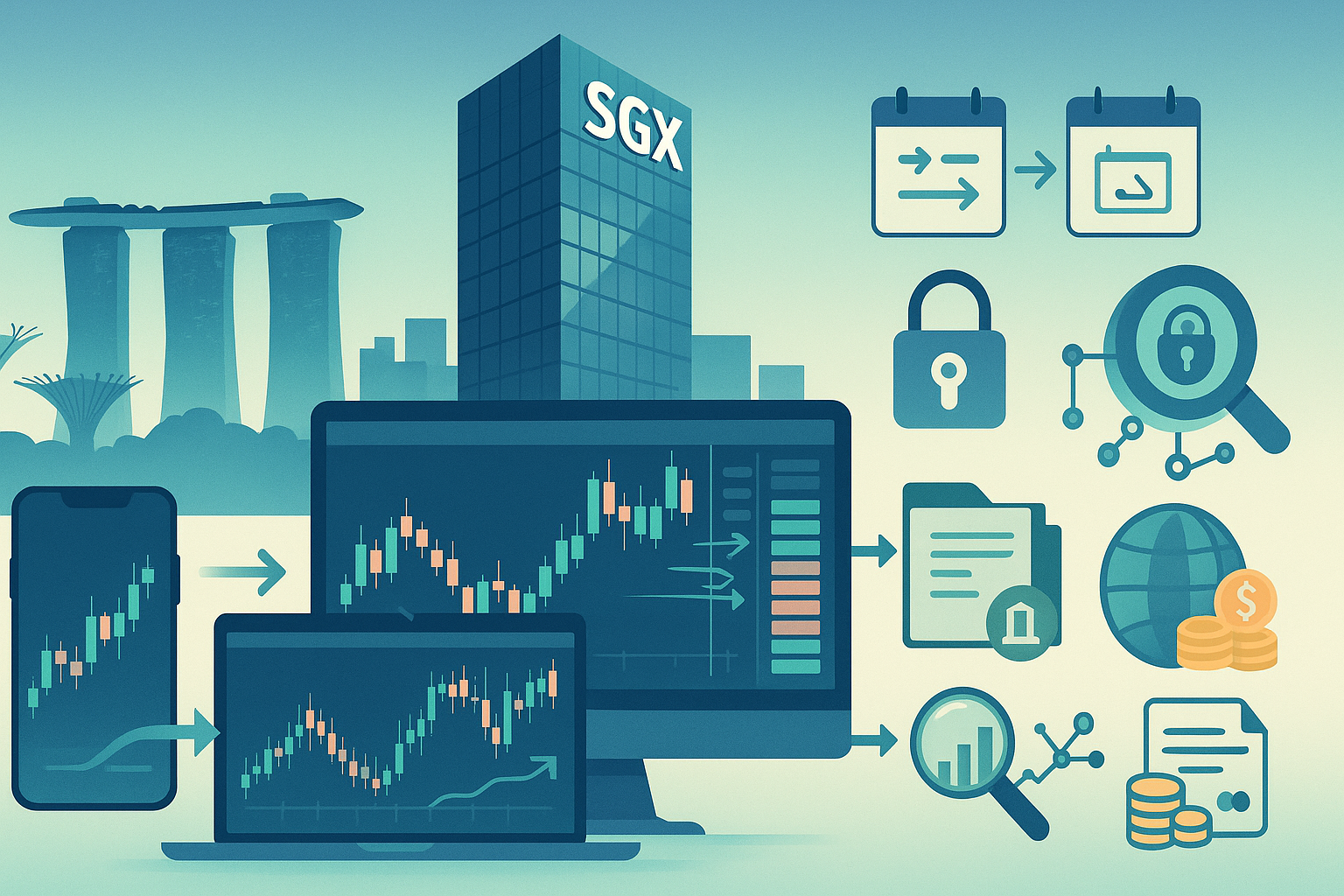
Execution tips can add basis points. Ladder maturities to smooth reinvestment risk and take advantage of varying auction results. Monitor MAS auction announcements for T-bills and SGS; occasionally, tail risk or soft demand can create better entry points. On SGX, use limit orders to control slippage. For SSBs, apply during the monthly window and plan redemptions around your cash flow calendar.
Singapore’s tax environment helps after-tax income. Individuals generally do not pay tax on capital gains, and interest from many government securities is tax-exempt, making sovereign income especially efficient. Keep records of purchase prices, coupon receipts, and any corporate actions for clean accounting and performance tracking.
By combining a liquid base of T-bills and SSBs, a duration anchor in SGS, and a curated selection of investment-grade corporates, income seekers can craft a portfolio that resists rate shocks, keeps costs low, and delivers reliable cash flows across market cycles.