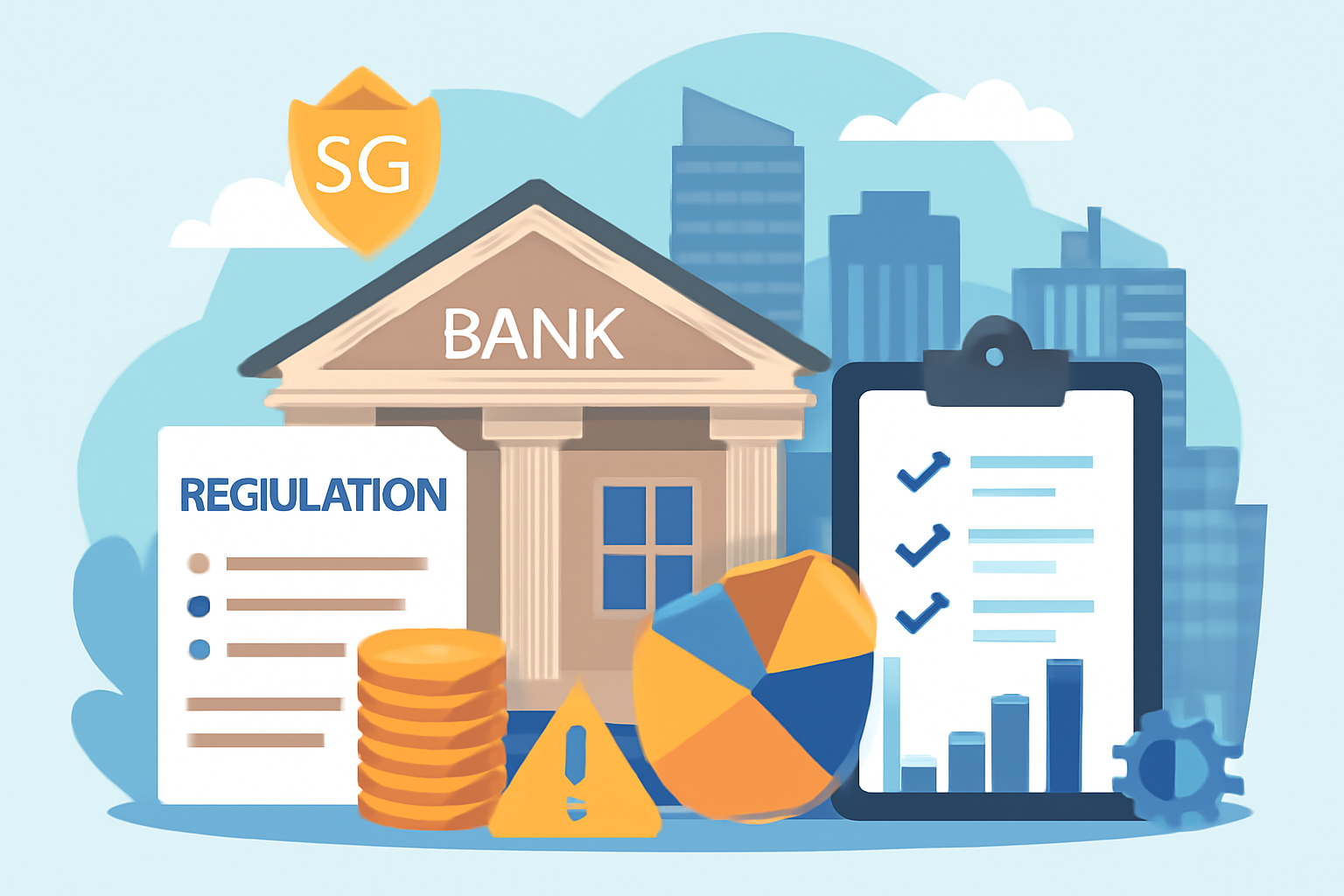
Singapore’s banking industry stands as one of the most well-regulated and resilient in the world. The country’s financial regulations, enforced by the Monetary Authority of Singapore (MAS), play a crucial role in maintaining the stability of the sector while fostering innovation. By balancing stringent oversight with an open environment for new technologies, Singapore’s regulatory framework enables both established banks and emerging fintech players to thrive.
One of the key elements of Singapore’s regulatory environment is the focus on financial stability. The MAS imposes stringent capital requirements on banks, ensuring they maintain sufficient reserves to cover potential risks. These capital adequacy standards are in line with global norms, such as the Basel III framework, which aims to reduce the likelihood of financial instability by requiring banks to hold higher-quality capital buffers. This regulatory measure is designed to protect depositors, creditors, and the broader financial system in the event of economic shocks.
In addition to capital requirements, Singapore’s banking regulations also mandate that banks maintain adequate liquidity. The MAS uses liquidity coverage ratios (LCR) to ensure that banks have enough liquid assets to meet their short-term obligations, especially in times of market volatility. These regulations help prevent liquidity crises, which can result in banking failures, and bolster investor confidence in the banking system.
The regulatory framework in Singapore also emphasizes effective risk management. Banks are required to adopt comprehensive risk management strategies to identify, measure, and mitigate financial risks. This includes credit risk, market risk, and operational risk. Furthermore, the MAS mandates that banks conduct stress tests to assess their resilience during adverse economic conditions. This proactive approach ensures that Singapore’s banking system remains stable and capable of weathering external shocks.
An important feature of Singapore’s regulatory landscape is the emphasis on anti-money laundering (AML) and combating the financing of terrorism (CFT). The MAS enforces stringent AML and CFT regulations, requiring banks to implement robust due diligence processes. This includes verifying customer identities, monitoring transactions for suspicious activities, and reporting any concerns to the relevant authorities. These measures help maintain the integrity of Singapore’s financial system and protect it from illicit activities.
Singapore’s regulatory environment is also uniquely supportive of fintech innovation. The MAS has introduced initiatives such as the regulatory sandbox, which allows fintech firms to test new financial products and services within a controlled regulatory environment. This approach enables innovation to flourish while ensuring that new technologies comply with existing regulations, thereby mitigating any potential risks to the financial system.
The regulatory framework in Singapore also promotes transparency and good governance in the banking sector. Banks are required to adhere to high standards of corporate governance, ensuring that they operate with integrity and accountability. This includes ensuring that banks have independent boards, conduct regular audits, and disclose relevant financial information to investors and regulators.
While the regulations in Singapore have contributed to the growth and stability of its banking sector, they can also present challenges, particularly for smaller players. Compliance with the various regulations requires significant resources, which can be burdensome for smaller banks and fintech startups. However, the government has introduced programs to provide financial support and facilitate the growth of smaller institutions, ensuring a level playing field in the industry.
Overall, the regulatory environment in Singapore has been instrumental in shaping the country’s banking sector. Through a combination of stringent capital requirements, liquidity regulations, and innovative measures to support fintech, the MAS has created a framework that promotes stability, growth, and trust in the banking system.