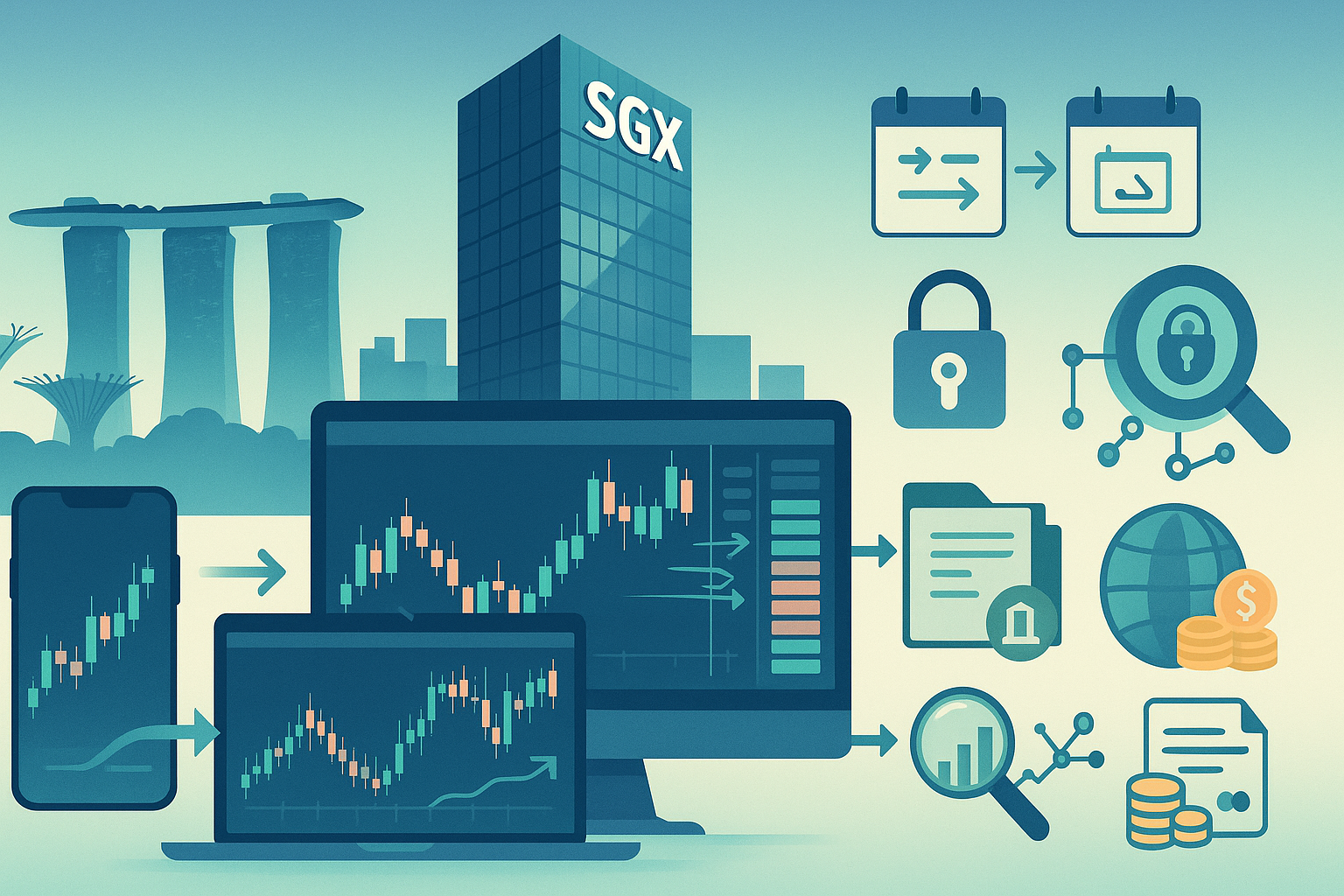
What distinguishes Singapore’s equity trading scene is its blend of bank-grade stability and modern tooling that’s accessible to everyday investors. SGX is the core marketplace where matching occurs, and MAS regulates market participants with an emphasis on risk management and operational resilience. Around that core, brokers compete on software, data, and automation.
Front ends vary from minimalist mobile apps to feature-rich desktops. Mobile-first platforms shine with intuitive navigation, push alerts, and biometric sign-in. Desktop suites from global brokers add advanced charting (custom indicators, multi-timeframe layouts), strategy notepads, and quick hotkeys for order entry. Many offer Level-2 depth for those who want to see beyond the best bid/ask, alongside time-and-sales streams to understand tape momentum.
Execution pipelines are standardized via FIX and broker risk gateways. Orders pass through pre-trade checks—fat-finger price bands, notional caps, and exposure controls—before reaching SGX’s engine. Timing matters: opening and closing auctions can concentrate liquidity and price discovery; continuous trading provides steady fills for liquid counters but may require patience in thin names. Time-in-force controls (IOC, FOK, GTD) and price-driven instructions (iceberg or discretionary, when offered) give traders nuance in how they seek fills.
Programmatic access is increasingly mainstream. Interactive Brokers’ TWS API and Python wrappers (like ib_insync) let retail technologists backtest and deploy simple systems. Saxo’s OpenAPI supports REST/WebSocket access to quotes and orders. While some mobile-centric brokers limit or gate APIs, they often integrate with third-party analytics, enabling semi-systematic trading via signals and alert-driven orders. Always assume rate limits and minimum notional thresholds, and test with paper accounts before going live.
Latency and proximity are relevant primarily to pros. SGX offers colocation services in its data center for firms that need microsecond-level access, coupled with deterministic network paths and hardware timestamping. For typical investors, platform uptime, graceful degradation during surges, and transparent incident communications matter far more than raw speed. MAS-aligned tech risk practices—regular DR drills, failover regions, and cyber hygiene—form a baseline expectation.
Post-trade mechanics are straightforward. Settlement runs on T+2, and the CDP serves as the central ledger for direct holdings. Custodian accounts bundle settlement within the broker, which can simplify multi-market portfolios. Corporate actions flow through CDP or the custodian, with entitlements, elections, and deadlines surfaced in the platform’s corporate actions module. For global securities, FX handling and dividend treatment are broker-specific; read the fine print.
Data and research define edge. SGXNet announcements are the authoritative source for disclosures. Most platforms embed earnings calendars, consensus estimates, and valuation snapshots (P/E, EV/EBITDA, dividend history). Screeners can filter for REIT yields, liquidity, or corporate governance flags. For developers, marrying official data feeds with your own factor libraries requires attention to entitlements, redistribution rules, and latency constraints.
Costs still influence outcomes. Commission tiers, clearing and settlement charges, market data fees, and optional subscriptions stack up. Singapore generally does not impose capital gains tax on individuals, but high-frequency, profit-driven activity may be viewed through a different lens—get advice tailored to your situation. Ultimately, choose a platform that aligns with how you trade: mobile simplicity for occasional investors; desktop and APIs for those who iterate, test, and code.