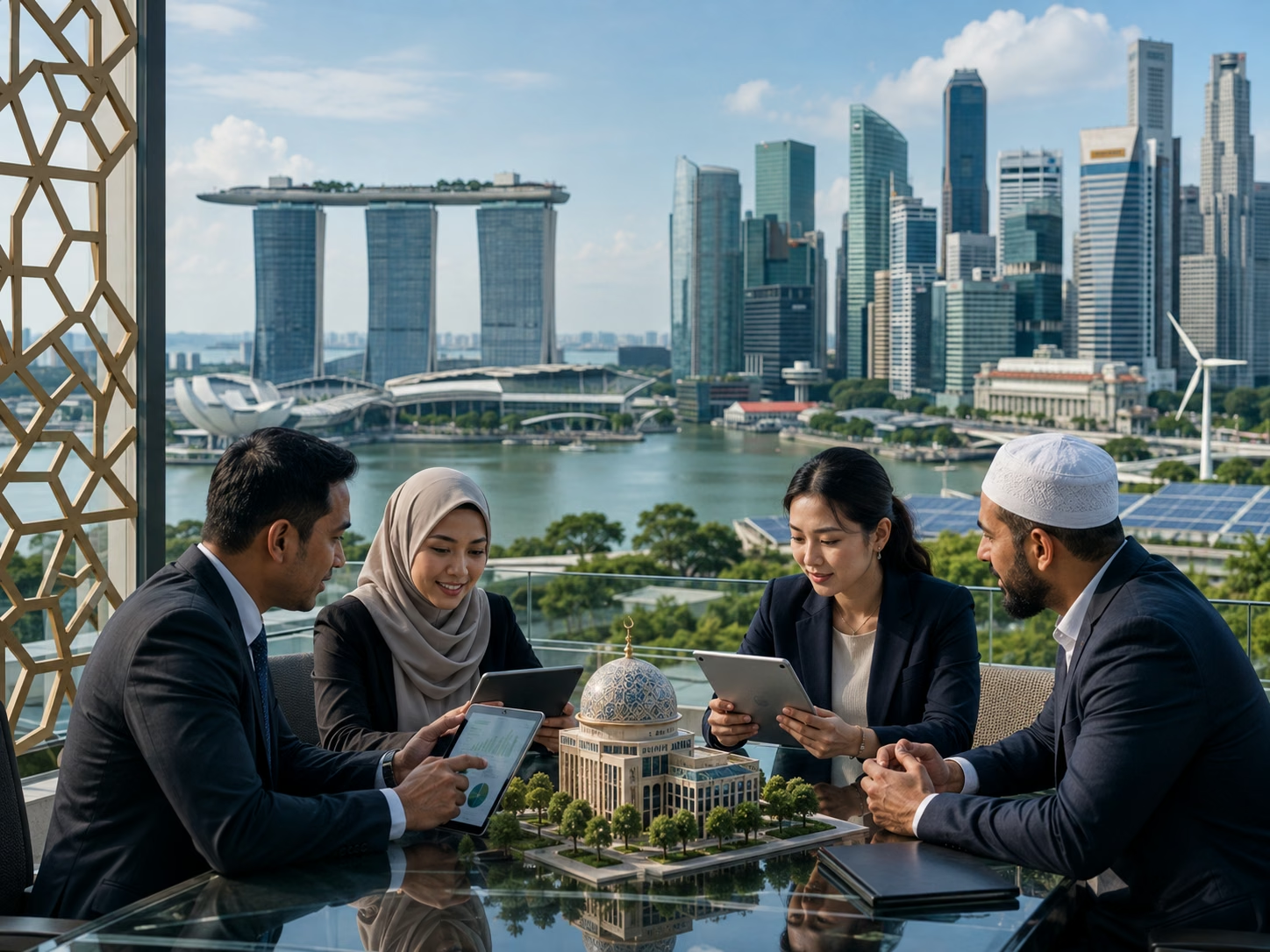
As global liquidity tightens, the hunt for stable, ethical fixed-income instruments has intensified. Within this context, Singapore has carved out a distinct identity as a premier Asian hub for Sukuk—the Islamic equivalent of bonds. Unlike conventional debt, which relies on interest payments, Sukuk represents partial ownership in a tangible asset or project. This structural difference makes it inherently attractive to risk-averse investors looking for asset-backed security. Singapore’s legal framework, which seamlessly accommodates the trust structures required for Sukuk issuance, has made it the preferred domicile for corporations looking to tap into Gulf liquidity while serving Asian operations.
Structural Innovations in Sukuk Issuance
The Singaporean market is distinguished by its sophistication in structuring complex transactions. While the Wakalah structure remains popular, we are seeing a surge in hybrid structures involving Ijarah (leasing) and Murabaha (cost-plus financing) to finance large-scale infrastructure. The city-state’s strong emphasis on legal documentation and dispute resolution offers comfort to international investors who may be wary of Shariah non-compliance risk. The presence of major global law firms with dedicated Islamic finance practices in Singapore ensures that contracts are robust and enforceable, a critical factor for institutional capital.
The Corporate Issuer Landscape
While the sovereign Sukuk provides the baseline, the corporate sector is where the yields become enticing. Singaporean-listed conglomerates and real estate developers have increasingly utilized the Sukuk market to refinance debt and fund expansion into Muslim-majority nations like Indonesia and Malaysia. By issuing in Singapore dollars or US dollars, these entities attract a diverse pool of investors. For the Halal-conscious investor, this presents an opportunity to earn predictable returns from blue-chip companies without compromising on religious ethics.
Connectivity with the Middle East and China
Singapore’s unique geographic and diplomatic position allows it to act as a conduit between the wealthy sovereign wealth funds of the Gulf Cooperation Council (GCC) and the high-growth markets of China and Southeast Asia. Recent partnerships between Singaporean asset managers and Middle Eastern banks have led to the creation of feeder funds that channel petrodollar liquidity into Shariah-compliant Asian infrastructure projects. This “golden thread” of capital flow is a major driver of the market’s expansion.
Current market data, such as the statistics published by the Islamic Financial Services Board (IFSB), highlights that Singapore’s share of the global Islamic capital market, while smaller than Malaysia or Saudi Arabia, is growing at a faster rate in the corporate issuance segment. This data underscores the city’s efficiency and the high quality of its listings, making it a “quality over quantity” market for discerning investors.