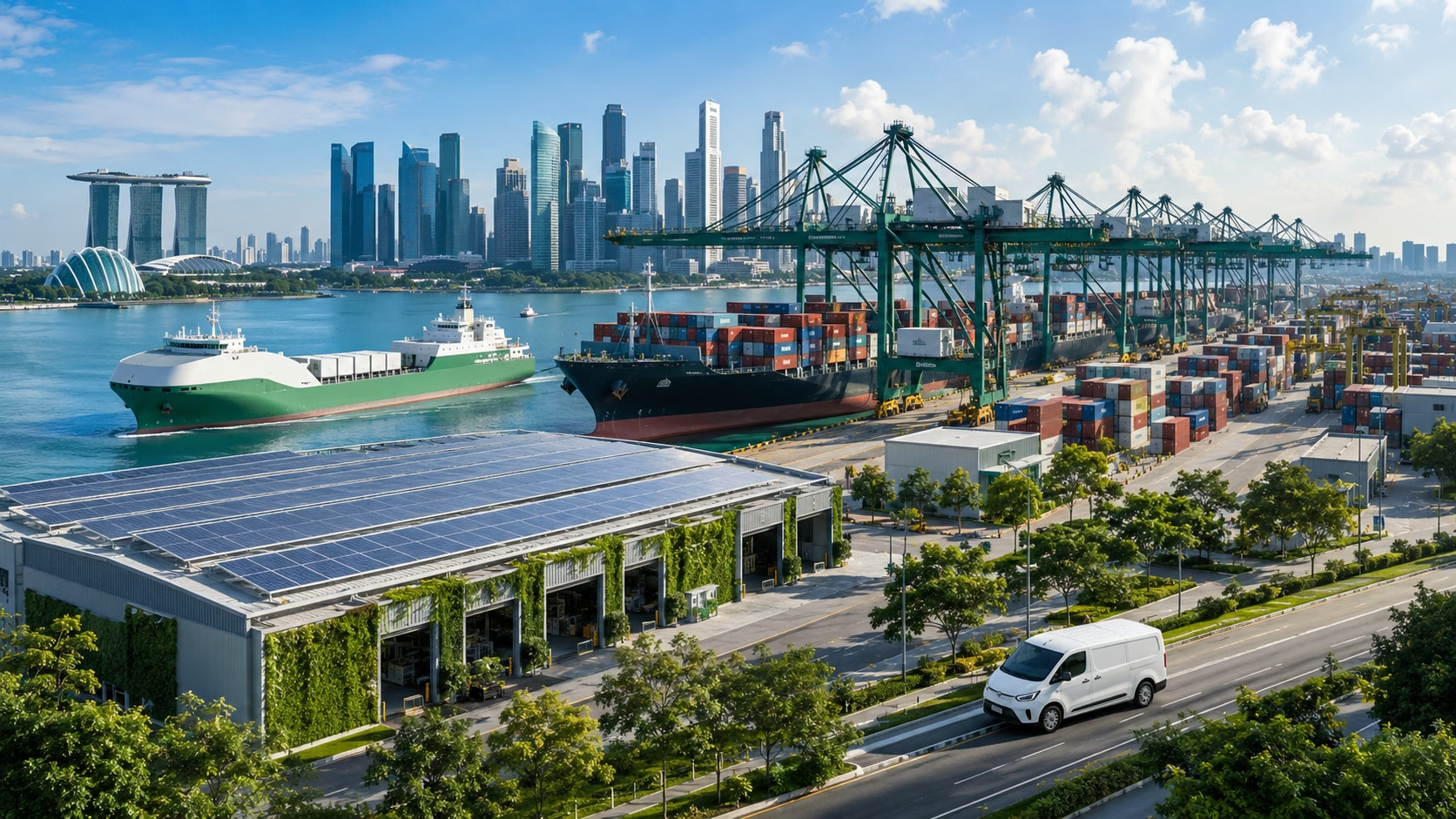
Singapore has developed a reputation as one of the world’s most sophisticated real estate markets. Behind this success are major property companies that have transformed limited land resources into highly valuable urban environments. These firms have created a development model where residential, commercial, and lifestyle spaces operate together within a carefully planned city ecosystem.
The growth of Singapore’s property sector reflects a broader trend across Asia: cities are becoming denser while investors demand higher quality, sustainability, and technological integration.
Property Companies Driving Singapore’s Urban Transformation
Singapore-based developers have expanded far beyond domestic projects. Companies such as CapitaLand Investment, Frasers Property, and City Developments Limited have built portfolios that include offices, hotels, shopping centers, residential projects, and industrial assets across multiple countries.
Their success comes from understanding that modern real estate is not only about selling buildings. It is about creating long-term communities and investment platforms.
CapitaLand Investment, for instance, operates as a global real asset manager with exposure to different property sectors. This strategy allows the company to benefit from changing market conditions while reducing dependence on a single segment.
Mixed-Use Development as Singapore’s Urban Strategy
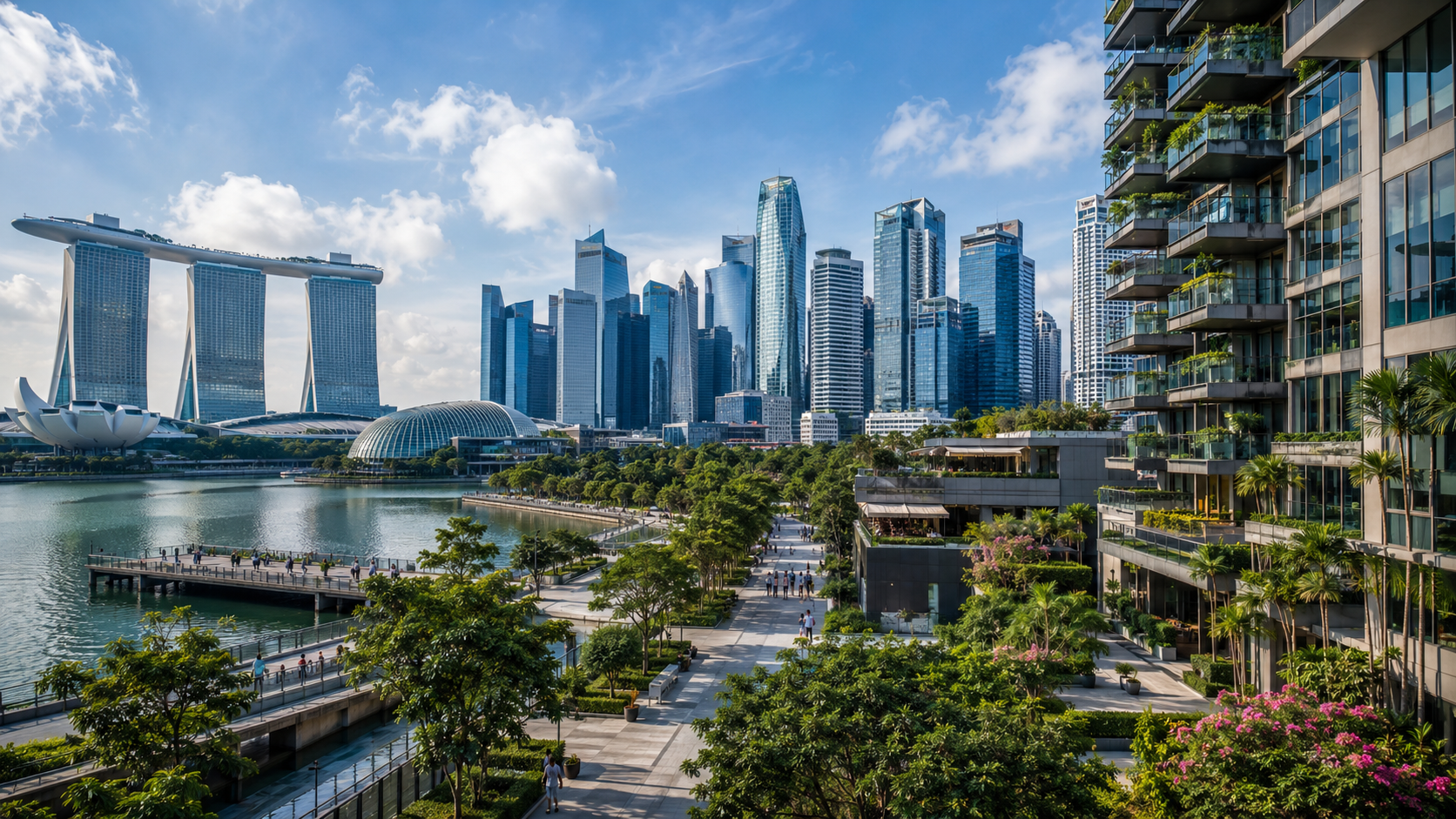
One of the most influential concepts in Singapore’s property market is integrated development. Instead of separating residential districts from commercial areas, developers create connected environments where people can live, work, shop, and access transportation within the same location.
Projects such as Marina Bay developments demonstrate how real estate can become part of national economic strategy. The area has evolved into a financial district, tourism destination, and premium residential zone.
This model has attracted international attention because it addresses common urban challenges such as traffic congestion, inefficient land use, and declining city-center activity.
Real Estate Investment Supported by Strong Data and Planning
Singapore’s property market benefits from transparent information systems and structured planning. The Urban Redevelopment Authority provides detailed market information that supports investors, developers, and analysts.
The URA private residential property index and market reports remain important references for understanding price movement and demand patterns:
https://www.ura.gov.sg/Corporate/Property/Property-Data
This transparency contributes to investor confidence and strengthens Singapore’s reputation as a reliable real estate destination.
Challenges Facing Major Property Developers
Despite strong fundamentals, Singapore property companies operate in a demanding environment. Land scarcity creates high development costs, while government regulations influence purchasing activity and market stability.
Developers must also respond to changing consumer expectations. Younger buyers increasingly prioritize connectivity, sustainability, and community facilities rather than traditional property features alone.
The industry is therefore shifting toward experience-based development. Buildings are designed to support wellness, productivity, and environmental goals.
Singapore’s Position in Global Real Estate Competition
Singapore property companies are competing not only within Southeast Asia but also with major markets such as Hong Kong, Tokyo, and Sydney. Their advantage comes from combining disciplined urban planning with financial innovation.
As cities worldwide face challenges related to population growth and climate change, Singapore’s real estate model offers valuable lessons. The companies leading this transformation are those capable of turning limited urban space into sustainable and profitable environments.